
FedNor – The agency
Created in 1987 to assist in the expansion and diversification of Northern Ontario, FedNor was a special initiative under Innovation, Science, and Economic Development Canada (ISED) until 2021. In 2021, it became a standalone agency.
Becoming a standalone agency has increased FedNor’s advocacy both in Northern Ontario and in Ottawa. As a standalone agency, FedNor has a stronger connection with the central agencies, and an increased presence in Northern Ontario.
As the Government of Canada’s regional development agency for Northern Ontario, FedNor invests in strategic initiatives led by businesses, communities and organizations, and works with a variety of stakeholders to create good jobs and a more prosperous and innovative future in Northern Ontario.
FedNor – In brief
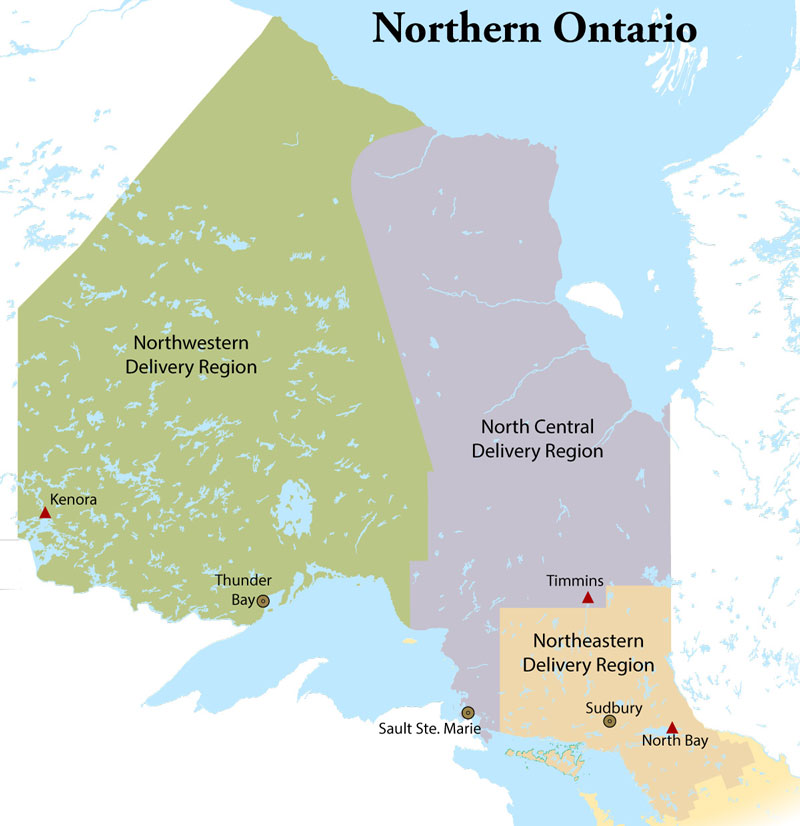
FedNor currently counts just over 100 staff across its offices.
Its headquarters is in Sudbury, and other offices are located in:
- Timmins
- Sault Ste. Marie
- Thunder Bay
- North Bay
- Kenora
It also has a small staffing complement in Ottawa.
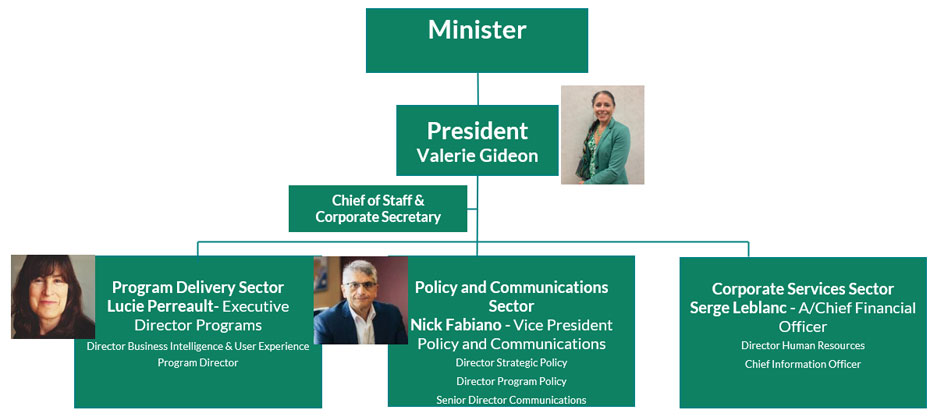
FedNor – Leadership
Northern Ontario context
Total gross domestic product (2022)
$32.49 billion
Population (2021)
856,193 or 6% of ON population
Number of communities
150 municipalities; 31 official language minority communities; 105 First Nation communities; 31 remote communities
With a large geography and low population density, almost half of residents live in small and dispersed communities with greater degrees of rurality and remoteness compared to southern Ontario.
With greater distances come higher costs of doing business and greater challenges in maintaining and developing new infrastructure including housing, broadband and transportation.
Mining, quarrying, and oil and gas extraction industry is the region’s economic driver. More economic diversification and innovation is needed to resist reliance on single industries.
Data is not always available for Northern communities given their smaller size and the need to preserve the population’s privacy. These data challenges pose constraints for informed decision-making in the region.
Current contextual factors
Demographic shifts
Population growth rate
- Northern Ontario’s population is ageing faster than its southern counterpart, especially in rural communities.
- Population peak achieved in 1991.
- Population projections are flat compared to those in Southern Ontario (2019 to 2046).
- Rural out-migration: residents seek job prospects and higher education.
- The Indigenous population is growing faster, 38.9% from 2011 to 2021.
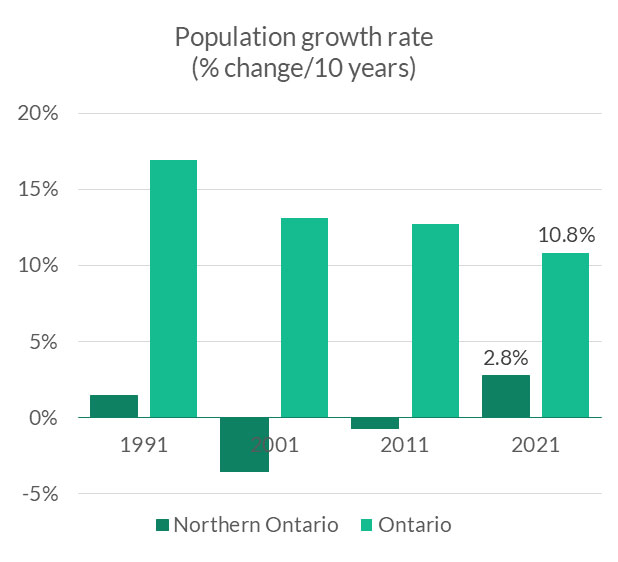
Figure 1. Population growth rate (% change/10 years)
| Census Year | Northern Ontario | Ontario |
|---|---|---|
| 1991 | 1.50% | 16.91% |
| 2001 | -3.60% | 13.12% |
| 2011 | -0.80% | 12.73% |
| 2021 | 2.80% | 10.83% |
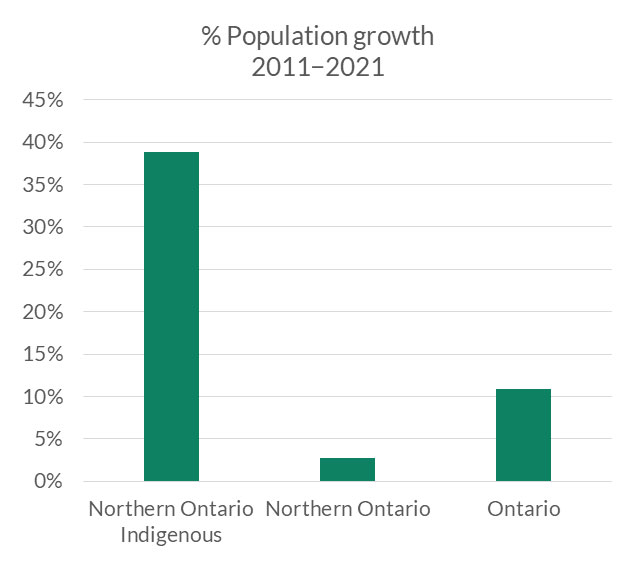
Figure 2. % Population Growth 2011-2021
| Northern Ontario Indigenous Population | Northern Ontario | Ontario |
|---|---|---|
| 38.9% | 2.8% | 10.8% |
Immigration to Northern Ontario
- Northern Ontario tripled the number of newcomers admitted from 2018 to 2022.
- Rural and Northern Immigration Pilot successfully attracted skilled professionals to fill labour supply gaps; however, the longevity and catchment areas of the program remain a concern.
- The Francophone population is significantly declining; there’s an important need for Francophone immigration in the region.
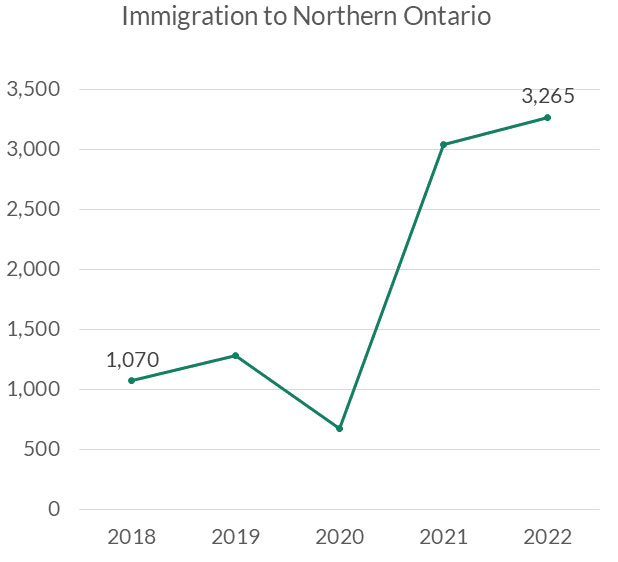
Figure 3. Immigration to Northern Ontario, Population Count
| Year | Population |
| 2018 | 1070 |
|---|---|
| 2019 | 1280 |
| 2020 | 675 |
| 2021 | 3035 |
| 2022 | 3265 |
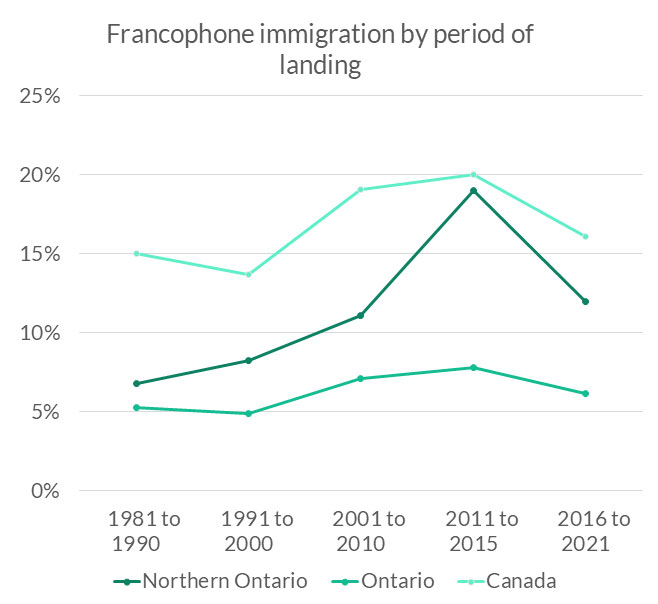
Figure 4. Francophone Immigration by period of landing, (% of the Immigrant population that is Francophone or bilingual)
| Period of Landing | Northern Ontario | Ontario | Canada |
|---|---|---|---|
| 1981 to 1990 | 7% | 5% | 15% |
| 1991 to 2000 | 8% | 5% | 14% |
| 2001 to 2010 | 11% | 7% | 19% |
| 2011 to 2015 | 19% | 8% | 20% |
| 2016 to 2021 | 12% | 6% | 16% |
Canada’s regional development agencies (RDAs)
RDAs are the dedicated federal actors supporting the economic development of Canada’s regions and promoting sustainable economic growth through tailored, regional approaches to program and service delivery.
They carry out their mandate through key activities tailored to local needs and regional realities:
- strategic investments in businesses (focus on business innovation, growth, exports);
- support for regional ecosystem growth through intermediary organizations and bringing together economic actors;
- support for development and diversification of regional economies to foster community vitality.
FedNor’s role in Northern Ontario’s economic development ecosystem
- FedNor plays a central role in growing Northern Ontario’s economy. FedNor helps businesses and communities find and access programs and funding. It supports innovation by working with partners and helping design and deliver programs like the Innovation Accelerator Program and the Regional Artificial Intelligence Initiative, and by connecting partners to resources that support technology adoption and business growth.
- FedNor collaborates with a wide range of partners, including regional innovation centres, post-secondary institutions, the Northern Ontario Heritage Fund Corporation, the Province of Ontario, municipal governments, and Community Futures Development Corporations (CFDCs). It also works closely with federal departments like Innovation, Science and Economic Development, Natural Resources Canada, Agriculture and Agri-Food Canada, and Indigenous organizations to support research, infrastructure, workforce development, and inclusive growth across the region.
Funding profile
FedNor core funding profile, including top-up funding received in Budget 2024:
- $50 million ($49.7 million) overall in transfer payment (grants and contributions or G&C)
- $15.6 million in operations and maintenance (O&M), including salary
Note: Top-up funding amounts to $9.7 million in G&C and $0.3 million in O&M
Our core programs
- Northern Ontario Development Program—$25.4 million
- Flagship development program focusing on community development
- Regional Economic Growth through Innovation—$15.1 million
- Program focused on innovation and supporting entrepreneurs; it has two streams:
- Business scale up
- Supporting innovation ecosystem
- Community Futures Program—$8.4 million
- Operational support for the Community Futures Development Corporations (CFDCs)
- Economic Development Initiative—$800,000
- Program focused on economic growth in Francophone communities
Our temporary programs
FedNor received temporary funding of $3.2 million in 2024−25 to support and deliver the following government initiatives:
- $0.2 million—Black Entrepreneurship Program renewed for five years to 2030
- $2.0 million—Tourism Growth Program runs from 2023−2026
- $1.0 million—Regional Artificial Intelligence Initiative runs from 2024−2029
FedNor will also support the delivery of the Regional Homebuilding Innovation Initiative from its existing core programs. RHII will run from 2024 to 2026.
FedNor – U.S. Tariff Response
On March 21, 2025, the Government of Canada announced its planned response to the U.S. imposed tariffs which included $450 million in proposed additional funding for Canada’s regional development agencies.
The Regional Tariff Relief Initiative aims to support impacted small and medium-sized enterprises to boost productivity, catalyze growth, and diversify markets, by helping businesses to raise productivity, enhance competitiveness and reduce costs to mitigate tariff impacts
FedNor’s anticipated allocation is $19.3 million over 5 years beginning in 2025.
The provisional date for presentation to the Treasury Board is May 29, 2025.
PGSNO Refresh
The Prosperity and Growth Strategy for Northern Ontario (PGSNO) is the Government of Canada’s targeted approach to regional economic development. This whole-of-government strategy builds on collaboration with government and regional stakeholders, and seeks to address the needs of Northern Ontario communities and businesses in three key areas: supporting innovation; growing companies; and building stronger communities.
Given that the economic landscape of Northern Ontario has shifted over the last five years, FedNor has embarked on a refresh to refine the areas of focus. Activities to date have included:
- The release of a PGSNO progress report in the spring which examined government efforts and year-over-year changes across the Northern Ontario economy, to demonstrate where progress has been made and where more efforts are needed.
- Stakeholder engagement sessions from July to November 2024 to review the progress made, discuss gaps and opportunities, and identify new priorities and actions for the future. A validation survey was conducted to confirm the findings of these sessions.
- The public release of a What We Heard Report which summarizes the findings from the stakeholder engagements and validation survey. This report will serve as the foundation for refining the strategy, ensuring it continues to meet the needs of residents, businesses, and communities in the region.
- PGSNO Roadmap to Refresh
- Spring 2024: Finalize Progress Report and engagement planning
- Summer 2024: Host targeted engagement sessions to collect feedback on new areas of focus
- 2025: Incorporate feedback and develop a refocused Strategy for the region
FedNor 2025-26 Departmental Plan objectives
- Promote short- and long-term job creation, business growth and community economic development
Areas of focus include:
- Business growth and expansion
- Skilled workforce and sustainable jobs
- Strengthen internal processes by improving communications, advancing data and information management, and improve overall effectiveness and agility
- Build on strategic relationships with regional stakeholders, while advancing key government priorities
Areas of focus include:
- Indigenous economic reconciliation
- Sectoral development (e.g., critical minerals, tourism)
- Digital clean technologies
- Grow an inclusive economy for all Canadians by ensuring equitable access to opportunities
Areas of focus include:
- Small and rural communities
- Lead the refreshed Prosperity and Growth Strategy for Northern Ontario to support Northern Ontario communities and businesses, focusing on innovation, business growth and stronger communities.
Areas of focus include:
- Collaboration with funding partners (e.g., Northern Ontario Heritage Fund Corporation)
Our clients
Profile of small and medium-sized enterprises in Northern Ontario |
|
| 1-4 Employees | 12,029 |
| 5-9 Employees | 5,470 |
| 10-19 Employees | 4,020 |
| 20-99 Employees | 3,441 |
| 100-499 Employees | 549 |
| Proportion of SMEs majority-owned by individuals of indigenous descent | 1.5% |
| Sectors with largest proportion of employment |
|
| Concentrated sectors of activity unique to the region |
|
Types of non-profit organizations (NPOs) supported
(Not exhaustive)
- Industrial clusters
- Incubators/accelerators
- Indigenous NPOs
- Tourism industry associations
- Community Futures Development Corporations (CFDCs)
FedNor investments
In fiscal year 2023-2024 FedNor provided:
- $56.8 million in funding supporting 316 projects
Over the last decade, FedNor has:
- Approved more than $755 million in funding
- Supported over 1,894 projects with Northern Ontario firms and organizations
- Leveraged an additional $1.27 billion in investment
- Encouraged job creation and inclusive business growth
Program results: NODP , REGI and CFP
Between April 1, 2021 and March 31, 2024, completed projects resulted in a total of:
- 17,571 jobs created or maintained, and
- 9,046 businesses started, expanded or maintained.
Example of a Northern Ontario Development Program project
With a $245,250 contribution through the Northern Ontario Development Program’s Community Investment Initiative for Northern Ontario, the Township of Hornepayne hired an economic development officer with the aim of implementing economic development projects identified in the township’s strategic and investment attraction plans. Anticipated outcomes of this project include job and business creation, the development of three plans and increased tourism visitation.
Example of a Regional Growth through Innovation project
Cambrian College of Applied Arts and Technology created a battery electric vehicle lab to assist mining equipment manufacturers with the adoption of battery electric power. With more than $682,000 in Regional Economic Growth through Innovation funding, the lab provided mining companies and small to medium-sized enterprises with testing and support services for their newly developed products, such as batteries, powertrains and electric motors for battery electric vehicles.
Example of a project supported by the Community Futures Program
Penokean Hills Farms, in Bruce Mines, specializes in high-end beef and pork products. Initially a group of family farms, it has evolved into a successful wholesaling business. The company collaborates with around 65 farmers from the Algoma, Sudbury, Manitoulin, New Liskeard and Cochrane regions to ensure a steady supply of quality cattle and hogs. With an investment through East Algoma Community Futures Development Corporation, a new state-of-the-art abattoir was built and opened in May 2023. This new facility has created 22 new jobs and strengthened the regional supply chain.
FedNor communications
- FedNor consistently generates positive media coverage in both regional media (CTV News, CBC News, Radio-Canada, Le Voyageur) and in local outlets (Village Media, Acadia Broadcasting, Cogeco). National coverage is limited.
- FedNor maintains strong relationships with journalists in major centres including Sudbury, Thunder Bay, North Bay, Sault Ste. Marie and Timmins.
- Over the past year, FedNor has significantly enhanced its social media presence by launching a new LinkedIn account. This addition complements FedNor’s successful initiatives on X, enabling better connection and engagement with Canadians.
- FedNor's social media performance includes:
- Followers: X/Twitter: 3,420; LinkedIn: 1,004
- Posts: X/Twitter: 291; LinkedIn: 145
- Impressions: X/Twitter: 57,490; LinkedIn: 70,795
- Average Post Engagement Rate: X/Twitter: 5.06%; LinkedIn: 9.26%
- Post Shares: X/Twitter: 236; LinkedIn: 260
- Post Reactions and Likes: X/Twitter: 396; LinkedIn: 2,215
Annex A: Core programs
Northern Ontario Development Program (NODP)
Community economic development
FedNor’s flagship development program has:
- A broad focus that can be adaptable to meet the unique needs of communities and businesses in rural and remote communities
- Flexible terms and conditions that meet the needs of Northern Ontario communities
It helps communities to:
- plan and mobilize their resources
- enhance business growth
- exploit new opportunities for economic development and diversification
Regional Economic Growth through Innovation (REGI)
REGI is a national program that has:
- A place-based approach that is adapted to the realities of Northern Ontario
- Uniquely focused to address the scale-up needs of Northern Ontario businesses
Business Scale-Up and Productivity
Assists with adoption/adaptation of technology to support scale-up, increased productivity and market expansion
Regional Innovation Ecosystems
Aims to develop and grow strong, inclusive regional ecosystems that support innovation and business growth
Targeted Manufacturing Initiative for Northern Ontario
Aims to help manufacturers boost their productivity leading to increased profitability and job creation
Community Futures (CF) Program
Locally based organizations dedicated to enhancing business growth and community development. They provide the following services:
- Strategic community planning and socio-economic development
- Business information and planning services
- Access to capital for small and medium-sized businesses and social enterprises
FedNor supports 24 Community Futures Development Corporations across the North.
Economic Development Initiative (EDI)
- Aims to strengthen the vitality of official language minority communities (OLMCs)
- Funding for projects that help businesses and organizations in OLMCs capitalize on economic opportunities
- Francophones were the second largest equity-deserving group in Northern Ontario in 2021, comprising 13% of the population (108,785 people).
- Francophones comprised a larger percentage of the population (13%) in Northern Ontario than in the province (3%) and nationally outside of Quebec (3%) in 2021.
- Northern Ontario is home to 31 official language minority communities and 26% of the province’s Francophone population, even though the region is home to around 6% of Ontario’s total population.
Annex B: Temporary programs
Black Entrepreneurship Program
National Ecosystem Fund supports new services:
- Mentorship
- Networking
- Financial planning
- Business training
BEP originally was for five years from 2020 to 2025. It was renewed for five years in February 2025 to extend until 2030.
Tourism Growth Program (TGP)
- Contributes to Federal Tourism Growth Strategy, which charts a course for long-term growth, investment, and stability in Canada’s tourism sector
- Three-year federal program to support development of local tourism products and experiences
- Program runs from 2023 to 2026.
Regional Artificial Intelligence Initiative (RAII)
The Regional Artificial Intelligence Initiative (RAII) will support two pillars:
- AI productization and commercialization—Support AI scale-ups address common challenges on their journey from lab prototypes to real-world applications, including securing growth capital, talent acquisition, data management, and navigating regulatory and business conduct frameworks.
- Adoption of AI applications—Support will address AI adoption lag among small and medium-sized enterprises. Support will focus on addressing challenges, such as skills gaps, AI integration complexities, and compliance with regulatory and industry standards.
- Program runs from 2024 to 2029.
Regional Homebuilding Innovation Initiative (RHII)
The Regional Homebuilding Innovation Initiative is an important part of Canada's Housing Plan and is supporting the residential homebuilding supply chain and changing the way industry builds homes in Northern Ontario through investments that will:
- advance innovative homebuilding solutions, and
- boost manufacturing efficiency within the homebuilding sector.
Program runs from 2024 to 2026.
Annex C: Budget breakdown
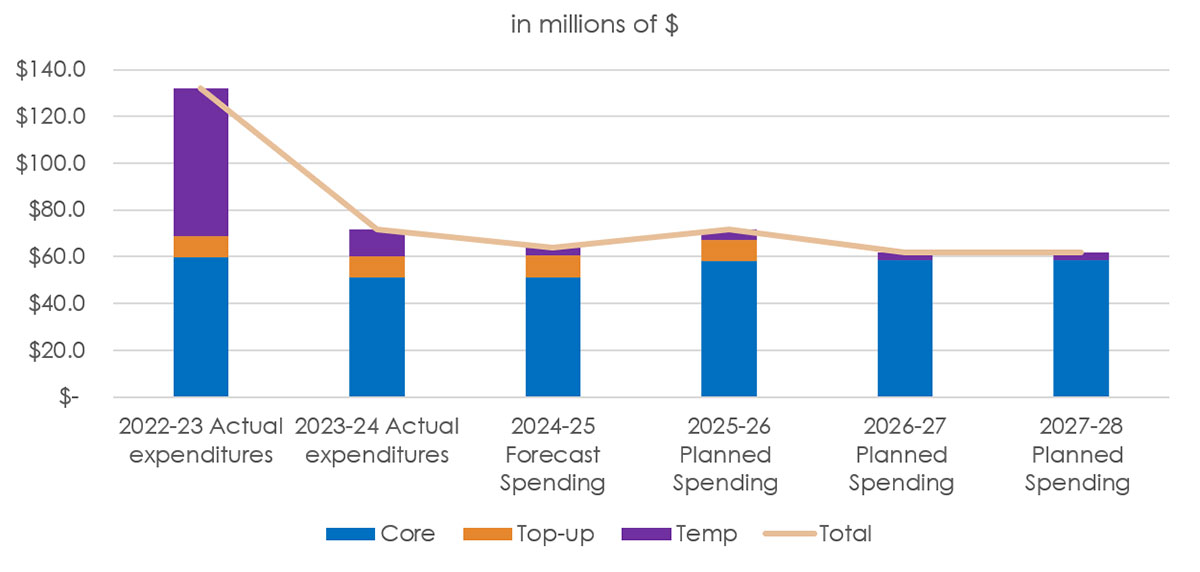
Annex C: Budget breakdown
| in millions of dollars | 2022-23 Actual expenditures |
2023-24 Actual expenditures |
2024-25 Forecast spending |
2025-26 Planned spending |
2026-27 Planned spending |
2027-28 Planned spending |
|---|---|---|---|---|---|---|
| Core | $59.9 | $51.3 | $51.2 | $58.2 | $58.4 | $58.4 |
| Temporary | $72.2 | $20.5 | $12.7 | $13.6 | $3.4 | $3.4 |
| Total | $132.1 | $71.8 | $63.9 | $71.8 | $61.8 | $61.8 |
For 2024-25, 80% of the Agency's funding is ongoing, with 20% in temporary funding to support NODP , REGI , CFP , EDI , Tourism Growth Program, Black Entrepreneur Program, and Artificial Intelligence.