
April 22, 2024
On this page:
- Acronyms and Abbreviations
- Program Background
- Assessment Scope and Objectives
- Assessment Questions
- Methodology
- Limitations
- Relevance
- Effectiveness
- Economic impacts
- Spotlight on Innovation Accelerator Programs Funded Through RIE
- Spotlight on Inclusivity through Rural Agri-Innovation Network (RAIN) projects
- Spotlight on Business Growth (Crofter's Food Ltd.)
- Efficiency
- Service levels
- Conclusions
Acronyms and Abbreviations
| BSP | Business Scale-up and Productivity |
| FedNor | Federal Economic Development Agency for Northern Ontario |
| RAIN | Rural Agri-food Innovation Network |
| RDA | Regional Development Agency |
| REGI | Regional Economic Growth through Innovation |
| RIE | Regional Innovation Ecosystem |
| SSMIC | Sault Ste. Marie Innovation Centre |
Program Background
The Regional Economic Growth through Innovation (REGI) program is delivered through seven Regional Development Agencies in their respective regions (Figure 1).
Figure 1: Canada's Regional Development Agencies

Long description
This figure shows a map of Canada with the geographic locations covered by each regional development agency. The Canadian Northern Economic Development Agency (CanNor) covers Yukon, Northwest Territories and Nunavut; the Federal Economic Development Agency for Northern Ontario (FedNor) covers Northern Ontario; the Canada Economic Development for Quebec Regions (CED) covers Quebec; the Atlantic Canada Opportunities Agency (ACOA) covers New Brunswick, Nova Scotia, Prince Edward Island, and Newfoundland and Labrador; the Federal Economic Development Agency for Southern Ontario (FedDev) covers Southern Ontario; Prairies Economic Development Canada (PrairiesCan) covers Alberta, Saskatchewan and Manitoba; and Pacific Economic Development Canada (PacifiCan) covers British Columbia.
REGI aims to support favourable conditions for businesses to grow and expand through two common streams of programming: Business Scale-up and Productivity (BSP) Stream and Regional Innovation Ecosystems (RIE) Stream (Figure 2).
Figure 2: REGI Program Streams
BSP Stream
Invest in and support businesses at various stages of development, including high-growth firms, to accelerate their growth, assist them in scaling up, and to enhance their productivity and competitiveness in both domestic and global markets.
Provide direct support to firms with emphasis on helping firms scale up and enhance productivity, develop new markets, and expand, and assist with the adoption of new technologies and processes.
RIE Stream
Create, grow, and nurture inclusive regional ecosystems that support business needs and foster an entrepreneurial environment conducive to innovation, growth, and competitiveness.
Provide support to ecosystem stakeholders, including business accelerators and incubators, Regional Innovation Centres, and clusters, with emphasis on advancing innovation in strategic sectors of the economy; strengthening small and mediums-sized enterprises' innovation capacity; fostering increased collaboration; supporting the development of early stage-business growth; building the foundation for cluster development; sustainability and competitiveness; and fostering inclusive growth.
The Horizontal Innovation and Clean Technology Review and Budget 2018 recognized the regional development agencies (RDAs) as central pillars of Canada's innovation ecosystem. The RDAs were identified as one of four flagship platformsEndnote 1 in providing necessary customized support to help Canadian companies in their efforts to scale-up and grow their businesses in all markets. In Budget 2018, $370M over five years was provided to RDAs to support the Innovation and Skills Plan across all regions of Canada. Budget 2018 also announced that over the next year, as part of the broader review of innovation programs, the Government would explore ways to simplify the existing suite of 22 programs offered by RDAs with the agencies placing greater emphasis on helping firms to scale up, reach new markets, and develop new technologies and process. Budget 2018 also proposed that RDAs could become the main platform to support regional innovation ecosystems. To deliver on their strengthened role and to streamline innovation programming to provide business-centric, nationally coordinated, and regionally tailored support, the RDAs implemented the REGI Program in 2018. The introduction of REGI and the call to simplify RDA innovation-focused programs also resulted in the RDAs being directed to shift most of their core funding for innovative projects to be delivered through REGI programs and sub-programs. In the five years from 2018-19 to 2022-23, RDAs collectively invested more than $3.06B in approved contributionsEndnote 2 (including the Budget 2018 funding) through REGI, averaging $612M each year.
The goal of REGI is to provide streamlined, nationally consistent and yet regionally tailored support for business productivity and scale-up, particularly for small and medium-sized enterprises and other underrepresented groups. It is also intended to assist in the enhancement of regional industrial and technology clusters and regional innovation ecosystems.
FedNor's five-year core allocation was $62.9M. During the period considered for the assessment, FedNor made decisions and sought transfers of funds, such as advancing funding earmarked for future years. These decisions increased FedNor's REGI allocation to $77M. FedNor delivers REGI's two streams, Business Scale-up and Productivity (BSP) and Regional Innovation Ecosystems (RIE). FedNor's REGI funding also includes the Targeted Manufacturing Initiative for Northern Ontario, which was transferred from the department's Northern Ontario Development Program when REGI was introduced. In this report, findings for Targeted Manufacturing Initiative for Northern Ontario projects are included with BSP findings.
Table 1: FedNor REGI Budget
| - | 2018-19 | 2019-20 | 2020-21 | 2021-22 | 2022-23 |
|---|---|---|---|---|---|
| REGI Grants and Contributions Budget (in millions) | 4.1 | 13.5 | 16.1 | 19.6 | 24.6 |
| REGI Percent of Total FedNor Grants and Contributions Budget | 8% | 23% | 12% | 15% | 21% |
Assessment Scope and Objectives
Objective
The FedNor regional assessment sought to:
- assess the relevance, performance and efficiency of the REGI program at FedNor;
- provide strategic information to support evidence-based decision-making, innovation, and accountability; and,
- strengthen policy and programs by identifying lessons learned, best practices and alternatives, including delivery models.
Approach
This regional assessment is complementary to the national l horizontal evaluation of the REGI program, completed in October 2023.
Evidence for the FedNor assessment includes the data collected as part of the national evaluation, such as a survey of BSP and RIE clients, interviews with internal and external stakeholders, Statistics Canada econometric study, and a document and data review. It also includes methods implemented solely for this assessment, including case studies, a survey of unfunded applicants, and a survey of ultimate beneficiaries.
Scope
The scope of the assessment covers all Grants and Contributions (Gs&Cs) delivered by FedNor through REGI 's BSP and RIE program streams, between April 1, 2018, and March 31, 2023 (5 years). Though other programs and initiatives are supported under the REGI Terms and Conditions (i.e., temporary targeted initiatives), these programs and initiatives are not included in the scope of this assessment.
The assessment explored, through 4 core questions, the extent to which the REGI program is meeting the needs of Canadian businesses and communities and how it is complementary to other support programming available to Canadian businesses and communities, its achievement of results and impacts on its clients, along with the efficiency of the program.
Context
The assessment took into consideration the various changing economic conditions that were identified as relevant to the assessment time frame.
The impacts of particularly challenging economic conditions that have occurred during the assessment period, include the COVID-19 pandemic and resulting supply chain issues, increasing interest rates and inflation, among others, which may have affected the outcomes of the program, particularly when it comes to assessing long-term outcomes. These economic challenges were considered when assessing REGI 's achievement of outcomes given that the current economic landscape differs significantly from what was present when the program was created.
Assessment Questions
Relevance
- To what extent has REGI met the needs of Canadian businesses and communities?
- To what extent is REGI still relevant and adapting to emerging economic needs of businesses and communities?
- How is REGI unique and/or complementary to other innovation support programming available to Canadian businesses and communities?
Effectiveness
- To what extent has REGI benefitted Canadian businesses and communities?
- Achievement of intended outcomes
- Other outcomes such as:
- Indigenous economic reconciliation
- Sustainable jobs
- Impacts of direct investments vs ecosystem investments
Efficiency
- To what extent was FedNor's REGI design and implementation efficient?
- To what extent is the REGI delivery model efficient?
- What are the factors that influence REGI 's efficiency?
Methodology
The assessment built on the evidence collected for the national evaluation which used a mixed-methods approach.Endnote 3 Additional field work conducted for the FedNor assessment was undertaken from February to March 2024. The methods implemented for the national evaluation are as follows. The methods unique to the FedNor assessment are described in the additional field work.
Document Review
Review of internal documents from FedNor, for example:
- REGI Terms and Conditions;
- Departmental Results Reports and Departmental Plans;
- Program guidelines, project criteria, assessment forms and tools;
- Program overviews and briefing notes; and,
- Success stories.
Performance Data Review
- Performance data collected from internal administrative systems.
- Data covered the time frame of 2018-19 (partial year) through to 2022-23.
- All data were based on approved projects.
Internal and External Key Informant Interviews
Semi-structured individual and group interviews were conducted with a variety of stakeholders. Internal stakeholders from FedNor included senior management (n=4) and program and policy personnel (n=4). External stakeholders included RIE clients (n=5).
Innovation Landscape Review
The Innovation Landscape Review was led by the Federal Economic Development Agency for Southern Ontario with input from other RDAs through a working group. The Review was intended to explore the changing federal landscape, and the forward-looking role and fit of REGI, as well as the changing landscape for business investment and economic development in Canada more broadly.
Econometric Analysis
Through a collaboration with Statistics Canada, an analysis of Statistics Canada micro-data was completed to determine the direct and indirect economic effects of the BSP stream. Using a statistical technique (propensity-score matching), two analyses were conducted. The first analysis relied on matching firms that had been clients of the BSP stream with similar firms that had not been supported by the program. The second analysis matched firms that had been clients of FedNor redistribution projects with those that had not to compare the economic effects of this indirect support. The analysis is based on 37 direct BSP client and 699 indirect client matches.
Survey of BSP and RIE Clients
An online survey was sent to all BSP and RIE FedNor clients. The BSP sample size was 51 with 21 clients completing the survey resulting in a 41% response rate. The RIE sample size was 31 organizations with 12 clients completing the survey resulting in a 39% response rate.
The additional field work conducted for the FedNor assessment, described below, was undertaken from February to March 2024.
Survey of Unfunded Applicants
An online survey was conducted with unfunded applicants. A survey link was emailed to 118 unfunded applicants. Of that, 25 organizations completed the survey for a response rate of 21%.
Surveys of Ultimate Beneficiaries
An online survey was also conducted with ultimate beneficiaries; that is, businesses that have been helped by REGI-funded organizations. These indirect clients might have received funding, advice/guidance and/or referrals from the REGI-funded organization. The surveyed ultimate beneficiaries are is a subset of the businesses included in the Statistics Canada indirect economic study (which included a total of 699 matched businesses).
FedNor does not collect the email addresses of ultimate beneficiaries. As such, to administer the survey, 9 REGI clients that received funding for redistribution projects during the review period were asked to forward the survey link to their clients. A total of 140 questionnaires were completed, but it is not possible to calculate a response rate.
Case Studies
Three case studies were conducted: one was focused on Innovation Accelerator Program funding awarded through RIE to Regional Innovation Centres or similar organization types; one was conducted with a RIE -funded organization to explore funding provided that aimed to make impacts in the agri-food sector in the Algoma region; and, one was conducted with a BSP -funded firm to explore direct business outcomes.
Limitations
The assessment used a mixed-methods approach with multiple lines of evidence to mitigate against any limitations associated with individual methods. This enabled the triangulation of evidence across sources of information to identify valid findings and draw evidence-based conclusions. However, the following limitations should be considered when reviewing the findings:
Number of BSP and RIE client survey respondents
While the original sample sizes for the surveys of BSP and RIE clients were not very large, the response rate for both surveys is good at 41% and 39%, respectively.
Sample of ultimate beneficiaries
FedNor does not collect email addresses for the firms that have received funding or other assistance from REGI redistribution project clients. As a result, ultimate beneficiaries were invited to participate in the survey through a generic link forwarded by 9 funded organizations. Not only is it not possible to calculate a response rate, but it is possible that funded organizations only forwarded the survey to the clients they believed would provide a positive assessment.
Performance metrics
There are limitations in FedNor's ability to disaggregate the data it collects for the REGI program by types of underrepresented business owners. To mitigate this limitation, survey respondents were asked to identify their ownership by underrepresented group.
Relevance
To what extent has REGI benefitted Canadian businesses and communities?
Summary of Findings:
Barriers: The main barriers faced by small and medium-sized enterprises in Northern Ontario are recruiting and retaining skilled labour, accessing financing, and the cost of doing business (including costs of labour, capital, energy or raw materials).
Meeting priorities: REGI is aligned with FedNor's priorities as outlined in its Departmental Plan and the Prosperity and Growth Strategy for Northern Ontario. Specifically, the priorities of supporting innovation and growing companies align very well with both REGI streams. FedNor has also reflected national and regional priorities of equity, diversity and inclusion, Indigenous economic reconciliation as well as clean technology, where possible.
Meeting needs: Direct clients and unfunded applicants relied on FedNor funding to carry out their activities as planned. FedNor's REGI program is seen to be well aligned with the business needs in the region, particularly increasing innovation capacity and business scale-up. The adaptability of the program was highlighted as being important to ensure that regional priorities can be addressed effectively. The evidence confirms that there is a continuing need for the program.
Complementarity: REGI is complementary to other funding programs available in Northern Ontario and is seen to be addressing a gap in the funding ecosystem.
What are the current and evolving needs of Canadian businesses and communities?
Northern Ontario small and medium-sized enterprises face several barriers to innovation and growth, particularly related to finding and affording skilled labour, the cost of doing business and accessing financing.
The top three barriers to innovation and growth were common among direct REGI funding recipients, ultimate beneficiaries, as well as unfunded applicants:
- Recruiting and retaining skilled labour
- Accessing financing
- Cost of labour, capital, energy or raw materials
In addition to these barriers, unfunded applicants also noted the lack of funding for early-stage research and development as one of the top barriers to innovation and growth. On the other hand, RIE clients included the lack of sector or market information among their top barriers.
These barriers were echoed in interviews with both FedNor and case study interviewees, particularly pertaining to labour shortages. A few FedNor interviewees also noted the distance to market as a barrier, particularly to exports.
Alignment to priorities
REGI is well aligned with FedNor's strategic priorities.
FedNor's departmental plan (2022-23) includes several priorities aligned with REGI, including strengthening support to business and fostering innovation. BSP is identified as the main tool aligned to its Departmental Result: Businesses are innovative and growing in Northern Ontario. Similarly, RIE is identified as a key mechanism to achieve the result: Businesses invest in the development and commercialization of innovative technologies in Northern Ontario.
The Prosperity and Growth Strategy for Northern Ontario (FedNor, 2018) identifies 3 priorities for Northern Ontario, including supporting innovation, growing companies and building stronger communities. The first of these, supporting innovation, includes expanding and strengthening the regional innovation ecosystems and supporting incubators, accelerators and innovation hubs, a clear alignment with the implementation of the RIE stream of REGI at FedNor. The second priority, growing companies, includes supports for scale ups and clusters, investing in growth sectors, and focusing on Indigenous businesses and women entrepreneurship, all clearly aligned with BSP implementation at FedNor.
Necessity of REGI funding
Applicants are highly dependent on REGI funding to carry out their projects as planned. Some BSP and unfunded survey respondents noted their project would have proceeded, but with a smaller scope and/or more slowly.
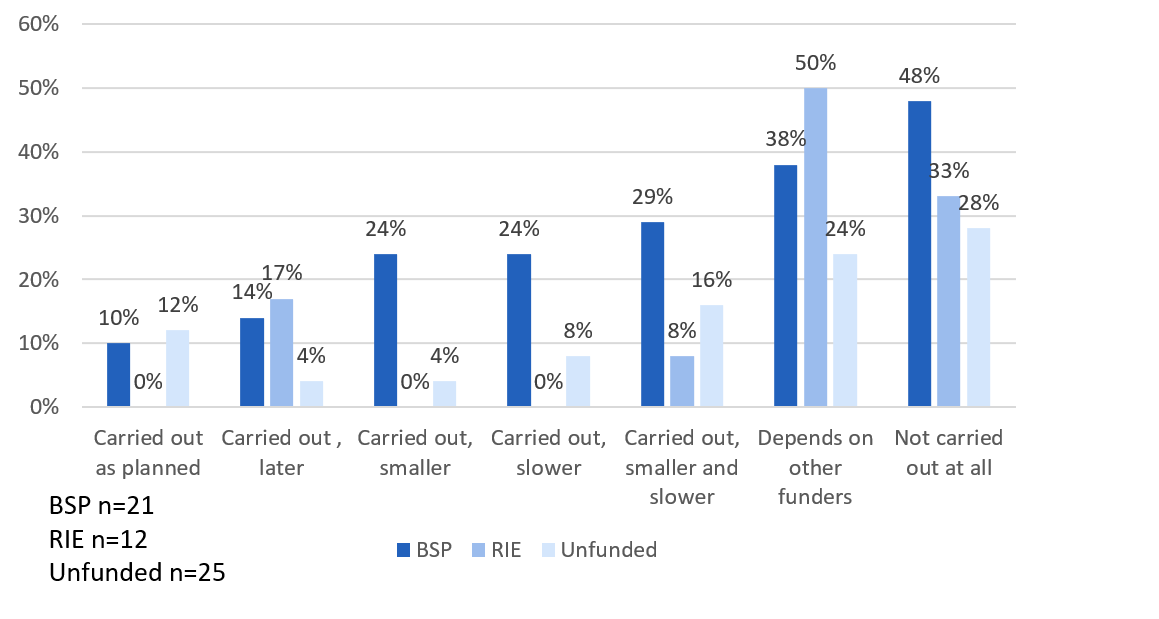
In the absence of REGI funding (see Figure 3), about half of BSP survey respondents and a third of RIE respondents said they would not have carried out their project at all. More than a quarter of unfunded survey respondents said they did not carry out their project at all. Only 10% of BSP and no RIE respondents said their project would have been carried out as planned without REGI funding. Only 12% of unfunded applicants were able to carry out their project as planned without REGI. The availability of other funding was a large unknown, even for unfunded applicants that are still seeking funding for their project.
For unfunded applicants who proceeded with their project in some way, the most common sources of funding were internal funds or provincial funding.
Figure 3: Percent of survey respondents indicating what would have happened/happened in the absence of REGI funding
Long description
| - | BSP | RIE | Unfunded |
|---|---|---|---|
| Carried out as planned | 10% | 0% | 12% |
| Carried out, later | 14% | 17% | 4% |
| Carried out, smaller | 24% | 0% | 4% |
| Carried out, slower | 24% | 0% | 8% |
| Carried out, smaller and slower | 29% | 8% | 16% |
| Depends on other funders | 38% | 50% | 24% |
| Not carried out at all | 48% | 33% | 28% |
|
BSP n=21 |
|||
Applicability to the economic needs of businesses and communities
REGI is aligned with business needs in the region, particularly related to increasing innovation capacity and business scale up. The program is also tailored to the innovation needs in the region.
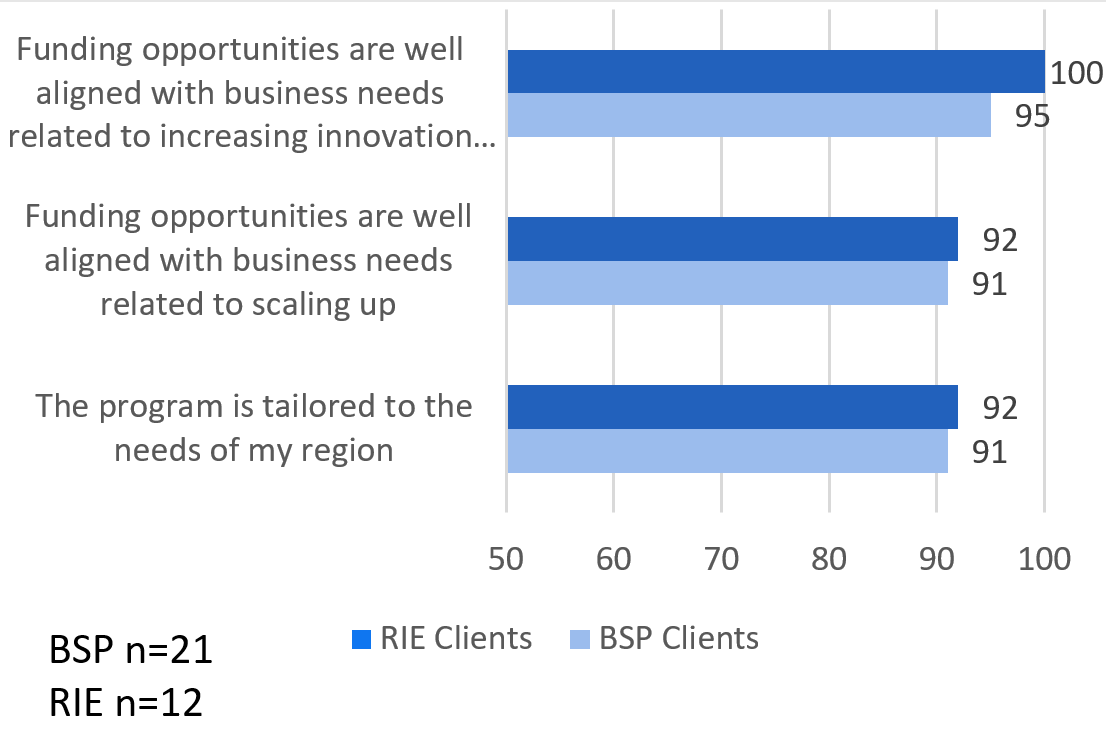
Nearly all BSP and RIE survey respondents noted that REGI offers funding opportunities that are well aligned with business needs related to increasing innovation capacity (95%, n=20 and 100%, n=12, respectively) and with scaling up (91%, n=19 and 92%, n=11, respectively), as well as being tailored to the needs of the region (91%, n=19 and 92%, n=11, respectively). See Figure 4.
Figure 4: Percent of REGI clients surveyed agreeing with the statement
Long description
| - | BSP Clients | RIE Clients |
|---|---|---|
| The program is tailored to the needs of my region | 91 | 92 |
| Funding opportunities are well aligned with business needs related to scaling up | 91 | 92 |
| Funding opportunities are well aligned with business needs related to increasing innovation capacity | 95 | 100 |
REGI is highly adaptable to FedNor's context, according to key informants. Senior managers at FedNor noted being able to use REGI program funding to cover shifting priorities such as mining and the green/net-zero economy and to increase the maximum budget to respond to larger project demands. FedNor field officers also noted that REGI was sufficiently flexible in ensuring that the program can meet the needs of most innovative businesses, either through direct funding from FedNor or through smaller contributions issued through redistribution projects. Most FedNor key informants were grateful they could use REGI as the vehicle to provide COVID-related relief for small and medium-sized enterprises.
The Statistics Canada econometric study found that almost half (48%) of FedNor direct BSP clients are in the manufacturing sector, followed by the service sector (not including professional, scientific and technical services) (39%). Conversely, indirect FedNor clients are in the goods sector (28%), service sector (28%) and manufacturing (27%).
FedNor field officers indicated that REGI is designed to meet the needs of businesses to scale up and increase innovation capacities. This has been taking place through REGI-funded projects to increase sales, expand markets and adopt new technologies, as well as through support from REGI-funded third-party organizations. REGI is also seen by FedNor field officers as a mechanism to strengthen regional innovation ecosystems through the RIE stream.
Alignment with priority areas – Equity, Diversity and InclusionEndnote 4
FedNor has the ability to report on the involvement of underrepresented groups and organizations in funded projects. However, challenges remain to identify the ownership profile of applicants.
FedNor has some capacity to collect, analyze, manage, monitor and report on gender and demographics-related disaggregated data. For example, performance data includes the number of projects that identified outcomes that targeted Indigenous peoples, women, francophones, or youth. Also, Indigenous organizations and communities, as well as francophone organizations, are options when clients identify the nature of their project's partnerships. FedNor interviewees spoke positively about the progress of the organization and the program supporting businesses led by underrepresented groups. The BSP Stream guidelines state that "Projects that support the government's commitment to inclusive growth (i.e., women and Indigenous Peoples) and Official Language Minority Communities may be given priority."
However, data limitations remain. The initial application form does not ask applicants to self-identify as to whether their business is led by a member of an underrepresented group.
According to the Statistics Canada econometric study, while the ownership of 66.7% of direct BSP client businesses is unassignable, 25% are majority-owned by men, 4.2% are majority-owned by women and 4.2% are equally-owned. For indirect clients, a larger proportion are owned by women (11.1% and 7.1% for indirect client supported by BSP redistribution clients and RIE clients, respectively) and equally-owned (9.6% and 10.9%, respectively). Majority men-owned businesses account for 30.7% and 19.6% for indirect client supported by BSP redistribution clients and RIE clients, respectively. Fewer are unassignable than for direct BSP clients in the study.
Most direct BSP clients and ultimate beneficiary survey respondents indicated their business was led by someone from an underrepresented group (most commonly women and older workers).
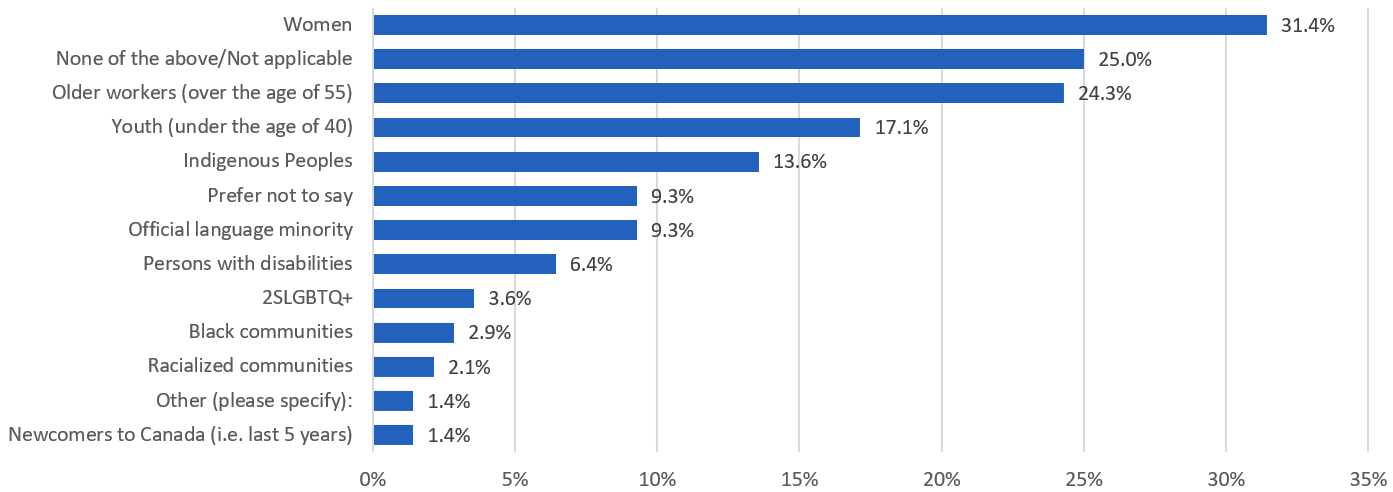
Survey results indicate that RIE and BSP clients, as well as ultimate beneficiaries are inclusive of various underrepresented groups. Three-quarters (75%) of ultimate beneficiary respondents, 62% of BSP respondents (n=13) and 42% (n=5) of RIE respondents identified their organization was majority-led by a person (or persons) identifying as belonging to one (or more) underrepresented groups. The most common groups among BSP clients were women (29%, 6 of 21) and older workers (24%, 5 of 21). For RIE organizations, the most common groups were women (25%, n=3), older workers (17%, n=2) and Indigenous People (17%, n=2). Ultimate beneficiary profile of majority-led ownership is presented in Figure 5.
Figure 5: Percent of ultimate beneficiaries surveyed identifying their business is majority led by an underrepresented group, by type of groupEndnote 5
Long description
| Newcomers to Canada (i.e. last 5 years) | 1.4% |
|---|---|
| Other (please specify): | 1.4% |
| Racialized communities | 2.1% |
| Black communities | 2.9% |
| 2SLGBTQ+ | 3.6% |
| Persons with disabilities | 6.4% |
| Prefer not to say | 9.3% |
| Official language minority | 9.3% |
| Indigenous Peoples | 13.6% |
| Youth (under the age of 40) | 17.1% |
| Older workers (over the age of 55) | 24.3% |
| None of the above/Not applicable | 25.0% |
| Women | 31.4% |
Alignment with priority areas – environment and the clean technology
FedNor has clearly outlined its interest in supporting clean technology and has made some strategic investments in the area. However, progress is limited due to the reportedly relatively small number of businesses with this focus in the region.
FedNor's commitment to clean technology and the environment is articulated in several corporate documents such as the Minister's Mandate Letter, the 2023 to 2027 Departmental Sustainable Development Strategy, Departmental Results Framework and the Prosperity and Growth Strategy for Northern Ontario. For instance, FedNor's 2023 to 2027 Departmental Sustainable Development Strategy outlines how FedNor's business development and regional innovation ecosystem programming supports the department's vision for inclusive and sustainable economic growth in Canada.
Most FedNor interview respondents were able to highlight several REGI-funded projects related to the environment. These included funding for equipment to develop clean processes; support freshwater research, projects related to battery electric vehicles, funding for plants looking to decrease their environmental impact (such as greenhouse gas emissions).
Having said that, a few interviewees stated that clean technology businesses in Northern Ontario are scarce (and, if they do emerge, typically struggle). Therefore, one key informant noted that REGI also supports companies adopting more environmentally friendly processes or buildings that support their core operations (as a side focus) as opposed to the development of clean technologies.
Complementary and Continuing Need
There is an ongoing need for the REGI program in Northern Ontario. REGI is addressing a gap in the funding ecosystem and is complementary to other funding programs.
The REGI program is seen to be addressing a gap in available programming, according to interviews and case studies. The case study of RIE -funded organizations providing accelerator-style funding found that REGI addresses an important gap in the programming landscape in terms of providing smaller levels of funding to help small and medium-sized enterprises that likely do not meet funding eligibility criteria for other programs. These projects help small and medium-sized enterprises overcome important hurdles in their path to growth.
Duplication is minimized through relationships with other funders (such as the Northern Ontario Heritage Fund Corporation, Industrial Research and Assistance Program, and Small Business Enterprise Centres, to name a few) and partners (such as post-secondary institutions). This allows FedNor and REGI-funded organizations to target REGI funds to address the gaps left by other funding organizations.
Most BSP and RIE direct clients surveyed (81%, n=17 and 83%, n=10 respectively) agreed that the program complements other funding programs. Similarly, all external stakeholder interviewees agreed that REGI is complementary to other federal or provincial programs/initiatives and attributed this complementarity to coherent efforts to minimize duplication across all players, including developing relationships and understanding of programs, the establishment of clear criteria, and explicitly asking about other sources of funding on applications.
Most BSP (95%, n=20) and all RIE direct client survey respondents agreed that there is a continued need for REGI in the region. BSP respondents felt there is a continuing need to support technology adoption, innovation and expansion/scale-up. Several survey respondents also noted that it is important to have a funder that is familiar with the unique regional context and challenges, which ensures that the funding is appropriately tailored. RIE respondents focused on ongoing business scale-up and technology adoption needs, among other areas.
Effectiveness
To what extent has REGI benefitted Canadian businesses and communities?
Summary of Findings:
Achievement of outcomes: FedNor funded 65 BSP projects and 52 RIE projects, creating or maintaining over 4,300 jobs. Indirect clients surveyed reported creating 112 new jobs (approximately 1.5 jobs each, on average). Most direct BSP clients surveyed indicated outcomes such as growth and scale-up, strengthened innovation or commercialization capacity, and improved productivity through adoption of advanced manufacturing technologies/equipment or digitalization. Almost all direct BSP clients surveyed stated that REGI funding is very important or essential to achieving these impacts.
The program also supported and further developed the innovation ecosystem in Northern Ontario through RIE -funded projects, BSP redistribution projects, and partnerships and collaborations developed and maintained by RIE -funded organizations. Almost all RIE organizations surveyed said that REGI funding is very important or essential to achieving these impacts.
Sustainability of outcomes: Many businesses are expecting to continue to grow, according to direct BSP clients and ultimate beneficiary respondents. For example, by funding businesses for equipment and infrastructure, they can continue to leverage it well into the future. REGI outcomes are expected to continue beyond the project end date with many businesses surveyed noting that they expect growth over the longer term.
Economic impacts: REGI-supported businesses (including direct and indirect clients) are achieving some economic impacts such as increased revenues and increased competitiveness. BSP clients and indirect clients have higher revenue and employment growth rates than non-clients. Indigenous economic reconciliation is taking place, but to a lesser extent.
Gender-based analysis plus: Many FedNor projects reached underrepresented groups, but it is not possible to report on actual figures since these numbers are not tracked. During the review period, 6 projects (1 BSP and 5 RIE) had activities that specifically targeted underrepresented groups.
Clean technology: Over the five years covered by the assessment, FedNor invested in 7 clean technology projects, valued at $3.4M.
Achievement of outcomes
FedNor exceeded its targets for BSP project funding and the creation or maintenance of jobs in the region. While RIE exceeded its target for job creation, it was slightly below target investments (reportedly due to the need to focus on pandemic-related relief programming).
Overall, FedNor met its target for amounts invested in BSP projects ($4M/year) when results are considered over the five-year period. The only year when the target was not met was in 2022-23 when only $0.6M was invested. Over the five years, the target for BSP was exceeded by 260%.
Business Scale-up and Productivity Job Impacts 2018-19 through 2022-23

Regional Innovation Ecosystem Job Impacts 2018-19 through 2022-23

Long description
Two arrows pointing to the right:
The first arrow shows that $52.1 mllion in BSP funding resulted in 65 projects and 2,058 jobsEndnote 6 between 2018 and 2023.
The second arrow shows that $34.9 million in RIE funding resulted in 52 projects and 2,326 jobs between 2018 and 2023.
However, the five-year target was not met for RIE investments ($8M/year). Notably, FedNor missed the target in 2021-22 and 2022-23, resulting in a five-year total of $34.8M, accounting for 87% of the target. Missing the target was attributed by some interviewees and case study respondents to the COVID-19 pandemic when RIE -funded organizations were asked to help deliver pandemic-related relief funds.
FedNor far exceeded its target for jobs created or maintained. The target was 250 jobs/year across both streams. Whereas over 4,000 jobs were created or maintained across streams, representing over 800 per year.
All respondents to the ultimate beneficiaries survey reported receiving funding, 18% received advice or guidance and 5% received referrals. The median funding amount was $10K.
More than a third (40%) of ultimate beneficiary respondents said their project created full-time jobs, for a total of 78 new jobs (1.6 per respondent, on average), and 43% reported part-time jobs created, for a total of 74 (1.5 per respondent, on average).
Extent of ecosystem development
REGI has supported and further developed clusters, as well as the innovation ecosystem in Northern Ontario. Supporting ecosystem actors provides concrete support to businesses, but also grows the relationships within the ecosystem to the benefit of businesses.
According to FedNor data, REGI met its target of developing 4 strong, dynamic and inclusive clusters in the region, in the areas of mining, forestry, health sciences and agriculture.
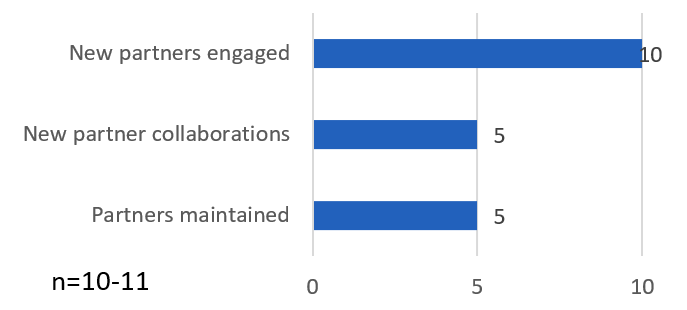
RIE clients indicated they have grown their networks with new partners (see Figure 6) as well as their programs and services. Three-quarters (75%, n=9) of RIE clients said they have developed and expanded programs and services and more than 4 of 5 (83%, n=10) said the funding helped them maintain existing programs and services.
Figure 6: Surveyed RIE clients indicating they have increased their networks (median #s)
Long description
| Partners maintained | 5 |
|---|---|
| New partner collaborations | 5 |
| New partners engaged | 10 |
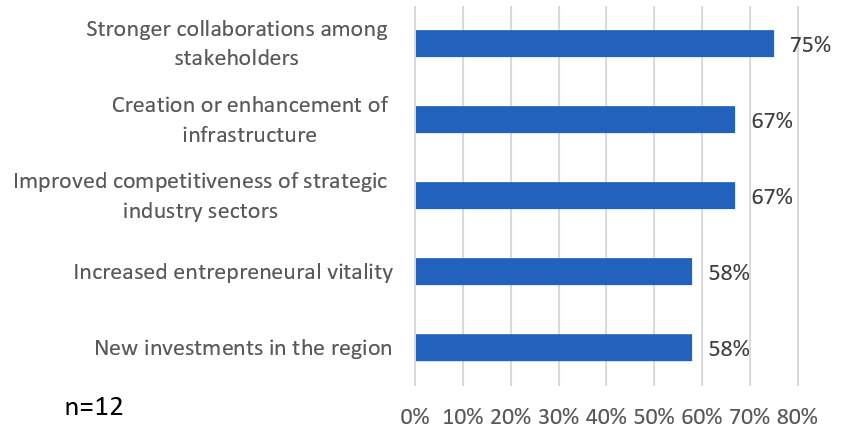
The survey of RIE clients also explored how their communities have benefited from REGI (Figure 7). The topmost benefits identified were new investments in the region, increased entrepreneurial vitality and improved competitiveness of strategic industry sectors or opportunities for industrial development.
Figure 7: Percent of surveyed RIE clients indicating how communities have benefited
Long description
| New investments in the region | 58% |
|---|---|
| Increased entrepreneural vitality | 58% |
| Improved competitiveness of strategic industry sectors | 67% |
| Creation or enhancement of infrastructure | 67% |
| Stronger collaborations among stakeholders | 75% |
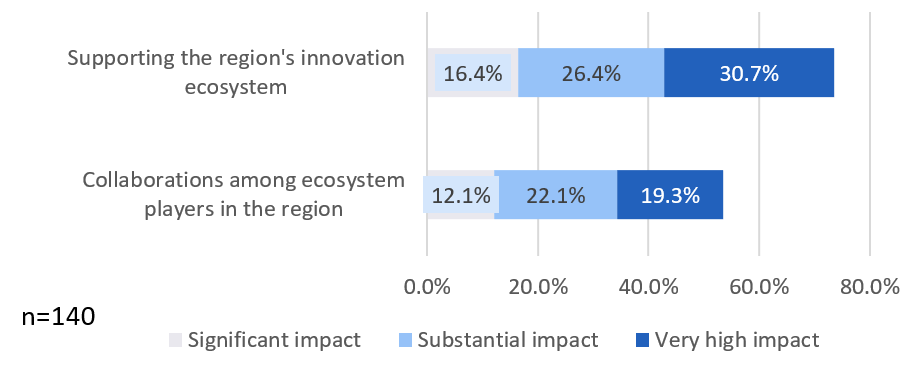
Almost three-quarters of ultimate beneficiaries agreed the REGI-funded organization was supporting the region's innovation ecosystem and almost the same amount agreed it supported collaborations among ecosystem players in the region (Figure 8).
Figure 8: Percent of ultimate beneficiaries noting the degree of impact of the REGI-funded organization
Long description
| - | Significant impact | Substantial impact | Very high impact |
|---|---|---|---|
| Collaborations among ecosystem players in the region | 12.1% | 22.1% | 19.3% |
| Supporting the region's innovation ecosystem | 16.4% | 26.4% | 30.7% |
RIE -funded organizations interviewed for the assessment noted that RIE funding supports their efforts to connect and partner with other ecosystem actors, resulting in less overlap and improved outcomes for businesses.
Business Success
95% of BSP clients responding to the survey indicated that REGI funding is essential (or very important) to achieving noted impacts.
Direct BSP clients are successful at achieving growth as a result of their REGI funding.
Internal and external interviewees were asked to comment on the extent to which REGI successfully supports businesses. Generally, interviewees of both types indicated that there has been moderate to high success in:
- supporting business growth: interviewees of both types were very positive in their assessment of success in this area;
- allowing businesses to adopt innovations: External stakeholders tended be more likely report that REGI had greater impact on this outcome than FedNor field officers. Both groups noted that FedNor has provided funding to develop and adopt new technology.
- supporting businesses to commercialize: interviewees of both types were positive in their assessment of this area. An external stakeholder noted that the program is particularly good in this space with small enterprises (including companies employing fewer than 10 people) but there may be a success gap in this space when it comes to medium-sized companies "who are more focused on 'day-to-day' operations".
Direct BSP client survey results validate the interview evidence and identify three common impacts being experienced by BSP clients as a result of their REGI project:
- Growth and scale-up (67%, n=21).
- Strengthened innovation or commercialization capacity (62%, n=21).
- Improved productivity through adoption of advanced manufacturing technologies/equipment or digitalization (57%, n=21).
The top three impacts reported by ultimate beneficiaries differed from direct BSP clients and included increased competitiveness (72%), increased sales or revenue (63%),and growth and scale-up (60%).
FedNor investment supports growth:
Activation Laboratories Ltd. is engaged in the development of an automated crushing and pulverizing robotic cell comprised of existing technology integrated in a system not commercially available for mineral assay facilities in Thunder Bay/Timmins. The technical objective of the project is to robotically automate the manual crushing and pulverizing operations. The market objective is to eliminate physically demanding manual operations within the company that are difficult to attract and retain suitable employees for, and at the same time create new skilled positions involving the day-to-day operations of the robotics cell.
Business success – Sustainability of outcomes
There is no significant difference in the confidence in business growth between the overall BSP respondent population and cross-tabulations among respondents of organizations majority-led by persons from underrepresented groups.
Aligned with the top noted impact of growth and scale-up, direct BSP clients are positive about the likelihood that their business will continue to grow. Specifically, 52% of BSP survey respondents indicated they are expecting growth the next 3 years, 43% indicated expecting growth in the next 5 years, and 38% in the next 10 years. Further, an average of 37% of BSP respondents considered the continued growth of their business to be "very probable" within the same timeframe.
Ultimate beneficiary survey respondents were asked to comment on job creation within the next 4 years. Of the 34% who responded, an estimated 131 full-time jobs were expected to be created by ultimate beneficiaries (with an average of 2.8 per respondent) and 112 part-time jobs were expected (2.6 on average per respondent).Endnote 7
Most FedNor field officers and stakeholder interviewees felt that outcomes are sustainable. In particular, both FedNor and stakeholders mentioned the degree of due diligence their organization does to ensure sustainability before funding a project with REGI.
FedNor invests in strengthening innovation and commercialization:
FedNor supported Flosonics Medical to develop the IT infrastructure required to commercially roll out its FDA-cleared wearable Doppler blood flow monitor (the FloPatch) that has the potential to significantly improve patient care in Sudbury and around the world. The funding supported the hiring of a team of software developers and industry experts to ensure the FloPatch can be fully integrated with the various medical electronic medical records systems in hospitals and clinics across Canada and the United States.
"The impacts are sustainable because [the business has] the equipment over the long-term. There is an immediate boost to productivity, removing bottlenecks, and allowing engineering of new products. Equipment can open new revenue streams."
Economic impacts
REGI funding is helping businesses achieve economic impacts to a moderate extent, including increased revenues and competitiveness. Firms that received indirect support were more likely to report these impacts than directly funded BSP clients.
The evidence suggests that directly funded BSP clients have realized increased sales or revenues to a moderate extent (52%, n=12). Ultimate beneficiaries, on the other hand, were more likely to report increased sales or revenue (63%) as a result of their REGI-supported project. A similar proportion of BSP clients (52%, n=11) noted that their REGI project resulted in increased competitiveness, whereas a larger portion of ultimate beneficiaries observed the same impact (72%).
While the same proportion of directly funded BSP clients noted impacts in terms of expanding into new markets (52%, n=11), impacts were more muted for ultimate beneficiaries (32%). BSP clients were also more likely than ultimate beneficiaries to report increased export sales (33% vs. 6%, respectively).
FedNor investment supports supply chain and market growth:
FedNor supported Electra Battery Materials Corporation's project to recommission and expand its hydrometallurgical cobalt refinery. The funding created more than 100 full-time jobs, improved Canada's supply chain, and reduced import dependency for electric vehicle battery production. The facility is the first and only facility of its kind in North America, capable of producing 25,000 tonnes of battery-grade cobalt sulfate annually, which represents five percent of the global market for refined cobalt.
Direct BSP clients and indirect client businesses are outperforming non-client firms of similar characteristics in revenue growth, employment growth and labour productivity growth.
Statistics Canada performed descriptive statistics and empirical modelling comparing REGI clients ( BSP direct clients), REGI indirect clients (through RIE and BSP redistribution projects) and non-client counterparts between 2018 and 2021.Endnote 8 For BSP direct clients, the matching rate was sufficient above 73% from 2017 onwards. For indirect clients, the matching rates were over 70% for BSP indirect and over 90% for business accelerators and incubators.
For all direct BSP clients served by FedNor, REGI program participation is associated with better outcomes across all performance metrics considered. Businesses that participated in the program sometime between 2018 to 2021, had better outcomes than comparable non-client businesses in the following areas:
- Revenue growth rates are 4.4% higher.
- Employment growth rates are 4.5% higher.
- Labour productivity growth rates are 13.4% higher.
For all indirect clients served by FedNor-funded organizations, the study found better outcomes across all performance metrics. Businesses that received services sometime between 2018 to 2021, had better outcomes than comparable non-client businesses in the following areas:
- Revenue growth rates are 18.8% higher.
- Employment growth rates are 8.1% higher.
- Labour productivity growth rates are 1.5% higher.
- Export propensity rates are 4.0% higher.
All differences found are statistically significant
Indigenous economic reconciliation
Indigenous economic reconciliation is taking place to some extent; RIE clients are most optimistic about this outcome.
The evidence suggests Indigenous economic reconciliation is happening to some extent (58%, n=7 RIE clients, 24% of direct BSP clients, 20% of ultimate beneficiaries). See Figure 9. However, when asked whether REGI contributes to Indigenous economic reconciliation, more than a quarter of all respondents of all types indicated they did not know/not applicable. A third (33%) of ultimate beneficiaries said their project benefited Indigenous economic reconciliation (not included in Figure 9).
The Innovation Landscape Review noted that REGI is advancing Indigenous economic reconciliation, and that regional development agencies are using the program's flexibilities to increase accessibility for Indigenous applicants. It goes on to note that FedNor provides regular opportunities for Indigenous clients to provide feedback and uses that information to support program and policy development.
Most FedNor field officers indicated that Indigenous economic reconciliation is occurring, citing successful projects with Indigenous communities. Stakeholder interviewees reported mixed evidence, with some citing their organization had funded projects with this focus, but that progress is limited by the number of opportunities presented.
Figure 9: Percent of survey respondents indicating REGI contributes to Indigenous economic reconciliation

Long description
| - | BSP Clients | RIE Clients | Ultimate Beneficiaries |
|---|---|---|---|
| Not at all | 14% | 0% | 42% |
| To a small extent | 33% | 17% | 0% |
| To some extent | 24% | 58% | 15% |
| To a large extent | 0% | 0% | 5% |
Who the funding is reaching – Gender-based Analysis Plus
It is difficult to report on the impact among underrepresented groups due to data limitations, although it can be said that many projects do reach or target these populations. Fewer ultimate beneficiaries noted reaching underrepresented groups than BSP and RIE direct clients.
FedNor does not track the number of projects led by underrepresented groups. It counts numbers of projects where activities or outcomes directly benefit underrepresented groups. During the review period, FedNor identified 6 REGI projects where the project activities directly benefited Indigenous peoples, francophones, women or youth. This included 1 project funded through the BSP stream for $366,300 and 5 funded through the RIE stream representing nearly $2.1M in funding.
According to the direct client surveys, reaching or targeting underrepresented groups is undertaken both by RIE and BSP funded organizations. RIE client survey respondents identified youth (75%, n=12), women (67%, n=12), Indigenous Peoples (67%, n=12), and newcomers to Canada (50%, n=12) as the most reached underrepresented groups. BSP client survey respondents identified youth (63%, n=19), and newcomers to Canada (58%, n=12) as the most reached underrepresented groups. Both BSP and RIE clients have hired staff from underrepresented groups as a result of their REGI project: youth under the age of 40 ( RIE 33%, n=12; BSP 40%, n=20), women ( RIE 33%, n=12; BSP 40%, n=20) and newcomers ( RIE 17%, n=12; BSP 65%, n=20).
From the ultimate beneficiary survey, the most common underrepresented groups targeted for reach and hiring were the same, led by youth and women. See Table 2.
| Group aimed for reach | Percent Reporting | Group hired | Percent Reporting |
|---|---|---|---|
| Youth (under the age of 40) | 26.4% | Youth (under the age of 40) | 39.3% |
| Women | 22.1% | Women | 26.4% |
| Indigenous Peoples | 21.4% | Indigenous Peoples | 12.1% |
| Newcomers | 15.0% | Newcomers | 14.3% |
| Older workers (over 55) | 11.4% | Older workers (over 55) | 12.1% |
Who the funding is reaching – clean technology
FedNor supported 7 clean technology projects over the 5 years within scope of the assessment.
FedNor tracks clean technology projects. Clean technology projects were funded in 2019-20, 2020-21 and 2021-22. FedNor supported 7 clean technology projects over that time. See Table 3.
Approved projects equalled $3.36M which included 4 projects ($1.8M) funded under the BSP stream and 3 projects ($1.56M) funded under the RIE stream.
Almost half (48%) of ultimate beneficiary survey respondents reported that their project had some or high impact on the environment. These are not necessarily "clean technology" projects, but rather those that had a beneficial impact on the environment. That is, projects might have benefited the environment without employing or investing in a clean technology.
| Stream | # of projects | Value of Approved Funding | Proportion of Total Approved Funding |
|---|---|---|---|
| BSP | 4 | $1.8M | 0.3% |
| RIE | 3 | $1.6M | 4.5% |
Leveraging
FedNor's REGI has an influence on a client's ability to leverage other types of supports. This benefit tends to be more prevalent for BSP clients than RIE clients.
Between 2018-19 to 2022-23, a total of $263.5M was leveraged for BSP projects, resulting in a ratio of $5.06 leveraged for every dollar invested. For the RIE stream, a total of $43.4M was leveraged, resulting in a ratio of $1.25 leveraged for every dollar invested.Endnote 10 Whether FedNor is meeting its target of amount leveraged per dollar invested could not be assessed as targets had not been set at the time of data collection for the evaluation.
RIE and BSP client survey respondents were asked whether REGI had a mild, moderate, major or no effect on financial leveraging. A majority, 83% of BSP clients and 73% of RIE clients, said that the program either had a moderate or major effect on their ability to leverage other support.
| - | 2018-19 | 2019-20 | 2020-21 | 2021-22 | 2022-23 | Total |
|---|---|---|---|---|---|---|
| Number BSP Projects Approved |
6 |
28 |
16 |
12 |
3 |
65 |
| $M FedNor Funding |
$6,334,317 |
$19,144,077 |
$21,314,965 |
$4,676,277 |
$595,482 |
$52,065,118 |
| $M Leverage |
$17,413,364 |
$39,270,370 |
$196,521,819 |
$9,699,121 |
$595,483 |
$263,500,157 |
| Amount leveraged per dollar FedNor funding |
$2.75 |
$2.05 |
$9.22 |
$2.07 |
$1.00 |
$5.06 |
| Indicator | 2018-19 | 2019-20 | 2020-21 | 2021-2022 | 2022-23 | Total |
|---|---|---|---|---|---|---|
| Number RIE Projects Approved | 4 | 26 | 11 | 7 | 4 | 52 |
| $M FedNor Funding | $1,062,242 | $18,508,671 | $8,221,378 | $4,209,596 | $2,861,390 | $34,863,277 |
| $M Leverage | $1,090,326 | $21,135,741 | $6,531,761 | $7,796,583 | $6,923,784 | $43,478,195 |
| Amount leveraged per dollar FedNor funding | $1.03 | $1.14 | $0.79 | $1.85 | $2.42 | $1.25 |
Success factors
Critical success factors for achieving REGI project outcomes include taking sufficient time to plan and consult, networking, understanding the market, having an export strategy, leveraging capacity, and employee retention.
Internal and external stakeholders shared their lists of critical success factors to effectively achieve project outcomes for BSP and RIE clients. These included:
- Networking as it provides feedback, access to the ecosystem, and helps with access to capital;
- Taking sufficient time to develop project planning and consultation phases. Both REGI's continuous intake model and decision timelines contributed to this success factor as they allow for the development of projects over time and across multiple phases;
- Understanding the market, and pursuing it with sales to translate the knowledge into revenue;
- Having a solid business plan, including realistic expectations;
- Having a national or international export strategy given that having only a regional focus can cause businesses to struggle due to the small population or market size; and,
- Retention of employees, increased sales, and leverage capacity.
Success stories
FedNor has many success stories illustrating businesses that have realized outcomes related to jobs, business growth, market growth, product development and commercialization.
Outcomes have been realized under both program streams, and typically include supporting and creating new jobs, leveraging funding to create opportunities for other firms in the region, scale-up operations, increased benefits for vendors in local supply chains, establish partnerships, among others.
Some companies have had more local impacts, such as re-investing in their community by providing members with transferable skills; whereas others have seen larger and more global impacts, such as by increasing the number of global customers.
Successes have also been reported in various sectors and priority areas; for instance, there are REGI success stories across the federal priorities of women in entrepreneurship; digital technologies; diversification and inclusive growth; innovation-oriented business; clean technology; technology adoption and commercialization, business scale-up and expansion and strategic support to innovation ecosystems.
Examples of success stories have been placed throughout this report, including the spotlight summaries that follow based on case studies conducted for the assessment.
Spotlight on Innovation Accelerator Programs Funded Through RIE
FedNor provides REGI funding through the RIE stream to organizations serving as Regional Innovation Centres to deliver Innovation Accelerator Programs. Four organizations were consulted for the case study, including:
- The Timmins Economic Development Corporation operating the Boost program
- The Sault Ste. Marie Innovation Centre (SSMIC) operating the Innovation Accelerator Program
- Innovation Institute Ontario North operating the Triple P program
- The Northwestern Ontario Innovation Centre operating the Next Level program.
Each program administered has similar features: targeting innovating businesses in the geographic catchment area, and funding up to a maximum of $10K per project with a 50/50 cost-matching requirement.
Interviewed organizations emphasized that their FedNor-funded programs address an important gap in the programming landscape, namely, smaller levels of funding to help small and medium-sized enterprises that likely do not meet funding eligibility criteria for other programs, thus helping them overcome important hurdles in their path to growth. Projects might include the purchase of equipment, a shelf-life study, etc. Having said that an outstanding gap for these small and medium-sized enterprises is to access funding for slightly larger projects (such as the implementation of Enterprise Resource Planning software).
"The funding offers small and medium-sized enterprises a stepping stone to the next thing."
All the RIE -funded organizations spoke about the importance of partnerships for the delivery of their programs and to ensure there is no overlap with the programming offered by other ecosystem actors. Mechanisms used by different organizations include: memoranda of understanding, partnership agreements, having other actors sit on review committees, and informal meetings/conversations.
Project Details
Years: Varied, but all 3-year agreements
Funding amounts: Varied, from 745K ( SSMIC ) to $2.8M (Innovation Institute Ontario North)
The following results are anticipated as a direct result of the REGI project:
- 152 jobs created or maintainedEndnote 12;
- 235 businesses created, maintained, expanded or modernized;
- 20 delivery partners involved;
- 30 strategic alliances created or maintained;
- 236 value-added products, processes services or technologies developed or commercialized;
- 16 new patents, licenses or copyrights filed; and
- 2 assets in support of innovation created, acquired/adopted or enhanced/adapted.
Spotlight on Inclusivity through Rural Agri-Innovation Network (RAIN) projects
The Sault Ste. Marie Innovation Centre has been operating the Rural Agri-food Innovation Network (RAIN) for over 10 years, with funding support from FedNor over that timeframe. The RAIN aims to enhance the Algoma District's and Northern Ontario's agri-food innovation ecosystem. The project includes promoting technology adoption, incubating food processing businesses, facilitating regional sector planning, and providing advisory and market development support for farm and food processing businesses. RAIN has an industry-based advisory committee.
Part of the activities funded under the agreement include training and mentoring, providing shared commercial test kitchen space, assisting with market expansion through trade show delegations, helping with process improvements, facilitating supply chain infrastructure expansion, developing and piloting indoor growing technologies, and demonstrating grazing management technologies.
RAIN addresses important gaps in the agri-food sector, including agricultural infrastructure (e.g., tile drainage, grain elevators), meat processing infrastructure and abattoirs. Gaps in test kitchen facilities have also limited innovation and new product development. There was also a gap to bring products to market, particularly outside of Northern Ontario.
While there are other funding programs in Ontario, they pose barriers for smaller producers in Northern Ontario. For example, they have short turnaround times or require mandatory training. In the case of the former, smaller producers don't have the capacity to respond with high quality applications in a short amount of time. In the case of the latter issue, training is rarely offered virtually or when numbers are low, training sessions are cancelled, resulting in a gap for Northern Ontario producers' access to funding.
When asked to comment on RAIN 's work with Indigenous businesses, it was noted that there are unique barriers for Indigenous producers who need to secure land off reserve since the Indian Act limits how land on reserve can be used and financed. Access to financing is limited as the land cannot be used as collateral. Similarly, newcomers have no intergenerational wealth as compared to most Canadian-born producers.
Project Details
Recipient: Sault Ste. Marie Innovation Centre (SSMIC)
Years: 2023 to 2026
Amount: $450K (half of total project cost of $1.005K)
Additional sources: $105K Northern Ontario Heritage Fund Corporation
"We wouldn't be able to pursue opportunities for our clients to adopt new technologies, assist in creating new products, and getting them to a wider market without REGI funding."
The most recent RAIN project is expected to realize following outcomes: 46 full-time equivalent positions created or maintained, 8 business created, and 20 businesses expanded or modernized.
The funding from FedNor was reported to greatly assist SSMIC to leverage funding from other sources to undertake research and market projects.
Spotlight on Business Growth (Crofter's Food Ltd.)
Crofter's Food Ltd. is a private, family-owned and operated, certified organic manufacturing company, established in 1989. Crofter's operates a specialized organic, low-sugar, fruit spread production plant in the District of Parry Sound. Crofter's first became profitable in 1999. In 2008, Crofter's became the leading organic jam manufacturer in the Natural Food Market in the United States (US) and Canada with sales exceeding $13 million. Crofter's has grown their company to employ 64 Canadian employees and one permanent US contractor. Crofter's moved all operations to their Seguin location in the District of Parry Sound in 2016.
With the onset of the pandemic, demand for Crofters' product increased substantially. To keep up with the demand, Crofter's applied for and received FedNor BSP funding of $883K to assist with equipment purchases, infrastructure upgrades and the implementation of new technologies.
In particular, new equipment allowed the company to expand into fresh fruit, resulting in new market access and increased exports.
The funding from FedNor was used in conjunction from the company's internal investment and funding from the Government of Ontario (Northern Ontario Heritage Fund Corporation). FedNor and Northern Ontario Heritage Fund Corporation funded different components of the projects, based on eligible costs, thereby ensuring complementarity rather than overlap. Specifically, FedNor funded the purchase of new equipment and the adoption and adaptation of innovative techniques and technologies.
Project Details
Years: 2020 to 2022
FedNor amount: $883K
Total project amount: $1,766,562
"The ability to handle fresh fruit was major. Our regular kettles would take days and days to boil these down. Higher-powered boilers and the new system make it possible to process fresh berries in time."
The FedNor-funded project resulted in 3 main impacts, including:
- The development of increased production capacity, particularly for the processing of fresh fruit.
- International market growth opportunities, including securing a private label program with Costco Wholesale Corporation for 2 regions in the US and potential for expansion to an additional 2 regions.
- Local employment creation, including 21 new full-time equivalent positions that are expected to be sustained over the long-term.
Efficiency
To what extent is the REGI delivery model efficient?
Summary of Findings:
The Delivery Model: Regional tailoring allows FedNor to deliver the REGI in a way that meets the needs of Northern Ontario communities and small and medium-sized enterprises. FedNor's regional tailoring includes: having a continuous intake model; allowing a wide variety of organizations to be eligible to apply for funding; having a lower target investment maximum; focusing on regional innovation centres; and, having sub-programs streams such as the Targeted Manufacturing Initiatives for Northern Ontario. FedNor's REGI design is efficient through its flexibility to make targeted investment based on local needs, the local knowledge of its program personnel on the ground, and its continuous intake model which helps ensure more responsiveness to client needs.
Design and Delivery: Both BSP and RIE clients are mostly satisfied with the design and delivery elements of REGI programming and FedNor is viewed as providing very efficient service to BSP and RIE clients. There are opportunities for improvement identified in a few areas of program delivery that may bring increased efficiency to both clients and the program, such as streamlining application processes, increasing the timeliness of approvals, and reducing duplication in the reporting requirements. There is also an opportunity to further strengthen referral services. Efficiency improvements in program design could include tailoring application and approval processes to applicant type and risk and, leveraging intermediaries to deliver more programming.
Resource Sufficiency: Based on internal interviewee data only, the program does not have sufficient financial resources or human resources. This lack of resources slows down processes and limits the impact of REGI in the region.
Regional tailoring to Northern Ontario
Regional tailoring allows FedNor to deliver REGI to meet the needs of Northern Ontario communities and small and medium-sized enterprises, including the regional innovation ecosystems supporting them.
Documents such as the Innovation Landscape Review and the 2023 Recommendation of the Council on Regional Development PolicyEndnote 13 underline the importance of the contribution of regions to national economic performance and well-being, and the importance of recognizing the distinctiveness of different regions and responding to their unique needs. The documents also state that compared to alternative models, regional development agency models for economic development are the most effective at understanding and meeting regional needs, as well as addressing regional challenges.
All interview respondents emphasized the importance of the regional tailoring of the REGI program. Benefits of regional tailoring noted include:
- Officers and staff that are better connected with stakeholders on the ground, which helps identify regional needs;
- Staff who understand the value of regional investments (i.e., there is no onus on clients to demonstrate both regional and national value);
- More specific tailored support and collaborations;
- Flexibility to make targeted investments based on local needs; and,
- Allowing for close collaboration with other regional development agencies to receive funding for a variety of programs, initiatives, support and investments.
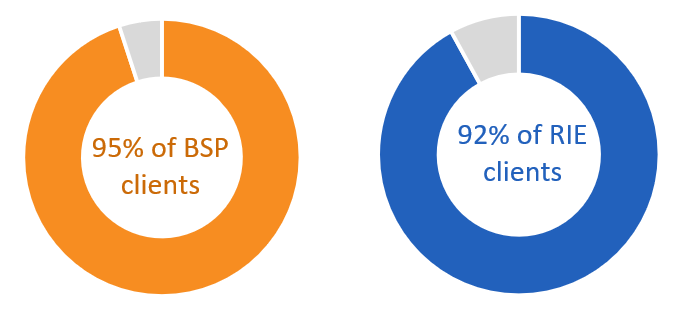
BSP and RIE direct client survey results support the interview findings that indicate that FedNor's REGI program is well tailored to meet the needs of Northern Ontario (Figure 10).
Figure 10: Percent of clients that agree that REGI is tailored to meet the needs of Northern Ontario ( BSP n=21; RIE n=12)
Long description
Two donut charts.
The first shows that 95% of BSP clients agree that REGI is tailored to meet needs; the second shows that 92% of RIE clients agree that REGI is tailored to meet needs.
Nature of regional tailoring
FedNor has tailored the delivery of its REGI program. Elements tailored include its intake model, eligible organizations, investment focus and maximum, and the inclusion of sub-programs.
REGI's place-based program delivery model allows regional development agencies to make targeted investments according to the needs, realities, and economic context of their regions and the needs of their regional businesses, such as activities relating to building ecosystem capacity. Regional development agencies can also design regionally-adapted tools under the national REGI Terms and Conditions to meet regional needs. Regional tailoring further allows for variations in size of investment and minimum or maximum contributions to reflect regional realities and needs. Often, regional tailoring focuses on funding different sectors, sizes or types of projects, and/or minimizing overlap with other funders.
Examples of how FedNor has tailored REGI include:
- A continuous intake model which allows for applications to be submitted as opportunities arise and helps facilitate working with organizations who develop their projects over a long time before applying for funding
- Eligible organizations include a wide variety of entities including: municipalities, municipal organizations and First Nations; industry and business associations; postsecondary institutions; research centres or alliances; small and medium-sized enterprises, and, not-for-profit organizations, such as Indigenous and Francophone organizations
- A focus on innovation ecosystem projects to ensure investments maximize opportunities inside the community
- A lower target investment maximum compared to other regions, which is necessary to maximize the impact and opportunities in the region
- Sub-programs in the REGI funding streams including the Targeted Manufacturing Initiatives for Northern Ontario to respond to sector needs in this space
Service standards and Program design and delivery
FedNor has been highly effective at meeting its 3-day application acknowledgement service standard. It has been less effective in meeting its 80-day decision on a fully completed application service standard. The timeliness of the approval process, as well as the ease of application processes represent opportunities for improvement in the program design and delivery.
FedNor's REGI program service standards are: providing an acknowledge receipt of an application within 3 working days, and providing a decision on applications within 80 working days of the receipt of a fully completed application. Between April 1, 2018, and March 31, 2023, FedNor's REGI team has met its 3-day standard 100% of the time (n=236). During the same period, FedNor's REGI team met its 80-day service standard 63% of the time (n=122). The year by year 80-day service standard results indicate that on years in which a lesser number of full applications were submitted, service standard were more effectively met [2018-19 service standard met=82% (n=11); 2019-20=56% (n=55); 2020-21=67% (n=30); 2021-22=53% (n=19); 2022-23=100% (n=7)]. Senior staff attribute the results to a lack of human resources that resulted from delivering more programs in response to the COVID-19 pandemic (specifically, the Regional Relief and Recovery Fund and other budget 2021 programs) having had an impact on the team's capacity to meet the 80-day service standard in 2020-21 and 2021-22. Further, senior staff noted that budget uncertainty is another factor that can impact the team's ability to render timely decisions on completed applications.
Survey responses (Table 6) confirm that the timeliness of approvals is an area for improvement for the program. About a quarter or more of BSP recipients (24%), RIE recipients (33%), and unfunded applicants (32%) indicate some dissatisfaction in this area. Another area for improvement indicated through the recipient survey is ease of the application process, especially for RIE clients.
| - | - | Completely dissatisfied | Somewhat dissatisfied | Mostly satisfied | Completely satisfied | Not applicable/ Don't know |
|---|---|---|---|---|---|---|
| Timeliness of the claims process |
BSP |
0.0% |
4.8% |
38.1% |
52.4% |
4.8% |
|
RIE |
0.0% |
0.0% |
41.7% |
50.0% |
8.3% |
|
| Efficiency of reporting requirements |
BSP |
0.0% |
9.5% |
28.6% |
57.1% |
4.8% |
|
RIE |
0.0% |
8.3% |
83.3% |
8.3% |
0.0% |
|
| Ease of application process/paperwork |
BSP |
0.0% |
4.8% |
42.9% |
47.6% |
4.8% |
|
RIE |
0.0% |
16.7% |
58.3% |
25.0% |
0.0% |
|
| Timeliness of the application and approval process |
BSP |
4.8% |
19.0% |
33.3% |
38.1% |
4.8% |
|
RIE |
0.0% |
33.3% |
33.3% |
25.0% |
8.3% |
Service levels
Both BSP and RIE clients express high satisfaction with REGI services.
REGI program administration is seen as efficient by both BSP and RIE direct clients. Almost all (90%) of direct BSP clients who responded to the survey indicated that they were satisfied overall with the services provided (of which 70% reported being completely satisfied). The satisfaction ratings of RIE clients who responded to the survey are also very high across all service level elements. 'Suggestions for referrals' was the service level element that had the highest responses of "don't know". In the survey for unfunded applicants, most (81%) respondents indicated that they did not receive a referral from FedNor to another organization from which they could apply for funding. See Table 7.
| - | - | Completely dissatisfied | Somewhat dissatisfied | Mostly satisfied | Completely satisfied | Not applicable/ Don't know |
|---|---|---|---|---|---|---|
| Use of the official language of your choice |
BSP |
0.0% |
0.0% |
4.8% |
85.7% |
9.5% |
|
RIE |
0.0% |
0.0% |
8.3% |
83.3% |
8.3% |
|
| Courteousness/professionalism of personnel |
BSP |
0.0% |
0.0% |
23.8% |
71.4% |
4.8% |
|
RIE |
0.0% |
0.0% |
25.0% |
75.0% |
0.0% |
|
| Ongoing business relationship with personnel |
BSP |
0.0% |
9.5% |
14.3% |
71.4% |
4.8% |
|
RIE |
0.0% |
0.0% |
33.3% |
66.7% |
0.0% |
|
| Availability of personnel |
BSP |
0.0% |
9.5% |
23.8% |
61.9% |
4.8% |
|
RIE |
0.0% |
0.0% |
25.0% |
75.0% |
0.0% |
|
| Ability of personnel to resolve problems/concerns |
BSP |
4.8% |
0.0% |
23.8% |
66.7% |
4.8% |
|
RIE |
0.0% |
0.0% |
33.3% |
58.3% |
8.3% |
|
| Business knowledge, advice, or other expertise provided by personnel |
BSP |
0.0% |
9.5% |
23.8% |
61.9% |
4.8% |
|
RIE |
0.0% |
0.0% |
41.7% |
58.3% |
0.0% |
|
| Communication from personnel on the status of your request |
BSP |
9.5% |
0.0% |
23.8% |
61.9% |
4.8% |
|
RIE |
0.0% |
0.0% |
41.7% |
58.3% |
0.0% |
|
| Support throughout the COVID-19 pandemic |
BSP |
4.8% |
4.8% |
23.8% |
52.4% |
14.3% |
|
RIE |
0.0% |
0.0% |
25.0% |
66.7% |
8.3% |
|
| Suggestions or referrals for funding or services offered by other federal departments or provincial governments |
BSP |
9.5% |
0.0% |
23.8% |
57.1% |
9.5% |
|
RIE |
0.0% |
8.3% |
25.0% |
41.7% |
25.0% |
|
| Respond to needs of underrepresented groups |
BSP |
0.0% |
0.0% |
23.8% |
38.1% |
38.1% |
|
RIE |
0.0% |
0.0% |
33.3% |
25.0% |
41.7% |
Unfunded applicants express satisfaction with REGI services.
REGI program administration is generally seen as being efficient by unfunded applicants (Table 8). Though unfunded applicants who responded to the survey were a little less favourable than funded recipients in their rating of REGI's services, most (70%) indicated that they were satisfied overall with the services provided. In terms of specific elements of service, at least 50% of unfunded applicants indicated being satisfied with all elements of service rated except for 'suggestions or referrals for funding or services'.
| - | Completely dissatisfied | Somewhat dissatisfied | Mostly satisfied | Completely satisfied | Not applicable/ Don't know |
|---|---|---|---|---|---|
|
Use of the official language of your choice |
8.0% |
0.0% |
8.0% |
68.0% |
16.0% |
|
Courteousness/professionalism of personnel |
8.0% |
0.0% |
24.0% |
56.0% |
12.0% |
|
Availability of personnel |
12.0% |
8.0% |
24.0% |
48.0% |
8.0% |
|
Communication from personnel on the status of your request |
8.0% |
16.0% |
16.0% |
52.0% |
8.0% |
|
Ongoing business relationship with personnel |
8.0% |
16.0% |
20.0% |
40.0% |
16.0% |
|
Business knowledge, advice, or other expertise provided by personnel |
8.0% |
12.0% |
28.0% |
36.0% |
16.0% |
|
Ability of personnel to resolve problems/concerns |
12.0% |
12.0% |
28.0% |
32.0% |
16.0% |
|
Respond to needs of underrepresented groups |
12.0% |
0.0% |
16.0% |
28.0% |
44.0% |
|
Suggestions or referrals for funding or services offered by other federal departments or provincial governments |
16.0% |
20.0% |
16.0% |
24.0% |
24.0% |
Some program efficiency improvements have been achieved in the period covered by the evaluation. Further efficiencies in the delivery of the program could be made through means such as streamlining the application processes, ensuring timely approval, and simplifying the reporting requirements.
Both internal stakeholders and clients perceive the program to be efficient overall. In interviews, some recipients underlined that the fact that REGI permits clients to leverage both federal and provincial funding sources has been experienced as an efficiency for their business. Two factors noted in internal stakeholder interviews as having positively impacted program efficiency are:
- FedNor having become an independent department
- The COVID-19 pandemic having pushed the digitalizing of operations
Both BSP and RIE clients provided many positive comments about their experience with FedNor. In interviews, clients shared that the program's continuous intake model, as well as the responsiveness of program personnel "on the ground" was particularly efficient.
Areas for potential program delivery improvement identified by clients include:
- Application process: Streamlining the application process. Consider tailoring the application process to applicant type (e.g., first-time versus repeat applicant).
- Approval process: Ensure timely approvals. Increase financial amount for authority delegation. Consider tailoring the approval process to project risk.
"The pace of the program moves at government speed, not business"
- Reporting and claims: Standardize and reduce duplication in the reporting requirements.
"Reporting needs to be streamlined and made online if possible. The cumbersome nature of reporting all the financials and the number of spreadsheets is really a venture for our finance folks"
Disbursement of program funds
There has been a high demand for REGI funding and FedNor has met this demand through increased budget allocations over time.
The core REGI budget was unchanged over the years within the scope of the assessment. In response to demand, FedNor advanced future year allocations into 2020-21, 2021-22 and 2022-23. See Table 9.
| - | 2018-19 | 2019-20 | 2020-21 | 2021-22 | 2022-23 |
|---|---|---|---|---|---|
| REGI Grants & Contributions Budget (in millions) |
4.1 |
13.5 |
16.1 |
19.6 |
24.6 |
Funding available to businesses and organizations has therefore increased from $4.1M in 2018-19 to $24.6M in 2022-23.
The program effectively disburses the funds allocated to the program. Between 2018-19 and 2022-23, FedNor was able to make investment decisions totalling almost $87M. This represents 3 times the original expected investment over the timeframe, suggesting a significant demand for the program (Figure 11).
Figure 11: Breakdown of FedNor REGI Investments
Sufficiency of human and financial resources
Internal interviewees report that the program does not have sufficient financial or human resources. This lack of resources has a limiting effect on the impact of REGI in the region.
Internal interviewees, both management and working level, pointed to inadequacies in program funding. Some noted the need for more financial resources to allow for the funding of more projects. Sufficient funding is further needed to meet the additional project expenses of companies in Northern Ontario. FedNor's budget is low relative to its provincial counterpart the Northern Ontario Heritage Fund Corporation. FedNor's ability to fund large projects is limited due to the size of its funding envelope. Some noted that FedNor's limited capacity to fund larger projects has the effect of limiting REGI's impact in the region.
Internal interviewees indicated that there is a need for more human resources. In particular, a need for more staff in satellite locations was noted and some concerns were raised about having fewer people than before reviewing projects. Money for Operating and Maintenance was described as being "limited" and it was explained that the lack of resources represents a particular challenge for small RDAs as they do the same kind of work as larger RDAs but without the same level of access to expertise. Although RDAs have been collaborative in sharing expertise to compensate for lack of resources, more assistance would be helpful to FedNor, as well as with more functional guidance for staff. Interviewees also noted that the need for more human resources is complicated due to challenges in attracting new employees to Northern Ontario, as well as the length of the hiring process.
Based on stakeholder suggestions, efficiency improvements in program design could include revisiting the investment maximum, considering providing grant funding, and others. Opportunities exist for better leveraging intermediaries, such as Community Futures Development Corporations, to deliver more programming.
Suggestions provided, mostly by external stakeholders, for program design improvement include the following potential opportunities:
Funding amount:
- Higher levels of funding would allow for larger projects and more growth. Further, providing a higher amount of funding would support recipients given the cost-prohibitive nature of projects in remote locations.
Grants:
- Consider providing grants to allow stakeholders more control over funding and make things flow faster by providing money up front, in particular for smaller businesses.
- Have part of the financial assistance be forgivable (grant) based on project success or job growth.
Timing of payments:
- A financing model whereby payments are made based on progress against agreed-upon milestones.
Tailoring processes based on applicant type and risk:
- Shorter approval process based on dollar amount, with more accountability for riskier projects.
- The process should be simplified especially for repeat applicants, such as through an accelerated stream, with a stream also offering more support to first-time applicants.
Eligibility:
- Consider allowing early-stage innovative companies to be eligible.
Leveraging:
- Access for small businesses directly (similar to/leverage some Northern Ontario Heritage Fund Corporation entrepreneurship programs)
- Leverage intermediaries, such as Community Futures Development Corporations, who have strong local economic knowledge, to deliver more programming.
Conclusions
Relevance
The assessment of FedNor's REGI Program confirmed a continuing need for the program. Businesses continue to face important barriers, the main ones being access to labour, access to financing and the high costs of doing business. Funding that helps businesses offset these challenges goes a long way to enable innovation and growth in the region. REGI is complementary to other funding programs available in Northern Ontario and is seen to be addressing a gap in the funding ecosystem.
REGI is meeting the needs of businesses and communities and FedNor has adapted the program to meet regional needs and priorities. The program is addressing important needs related to business growth and innovation ecosystem development. In particular businesses, needs related to scaling up and increasing innovation capacity are being met by the program. As well, BSP and RIE project clients, as well as unfunded applicants, all rely on FedNor funding to carry out their project activities as planned.
The assessment explored the extent to which the program is aligned with various priority areas, including FedNor-specific priorities, inclusive growth and clean technology. The assessment found that FedNor priorities are reflected in program design and funded projects. As well, both the areas of inclusivity and clean technology are considered in programming and project design. FedNor has endeavoured to improve efforts pertaining to gender and demographics-related disaggregated data, however, there are important areas for improvement (particularly, collected disaggregated data on the ownership profile of funded organizations).
The assessment found that indirect client businesses are more likely to be owned by women than direct BSP clients, BSP redistribution clients, or RIE clients. This finding is supported with evidence from the Statistics Canada economic study, as well as the survey of ultimate beneficiaries (compared with BSP and RIE direct client surveys).
Effectiveness
The assessment found that over the 5-year scope of the study, REGI has been very successful, including its investments, leveraging, job creation, and contributions to ecosystem development. REGI exceeded 5-year targets for investments in BSP and 87% of its targets for investments in RIE . The 65 BSP projects supported technology adoption, technology commercialization, adoption or adaptation of processes to improve productivity, capacity development for market diversification, as well as other economic development initiatives. A total of 7 clean technology projects were funded, totalling $3.4M. A total of 52 projects were funded through RIE .
The assessment found that the program has been very successful at leveraging additional funding. Over the 5-year period, a total of $263.5M was leveraged for BSP projects, resulting in a ratio of $5.06 leveraged for every dollar invested. For the RIE stream, a total of $43.4M was leveraged, resulting in a ratio of $1.25 leveraged for every dollar invested.
REGI has exceeded its 5-year targets for jobs created or maintained. Within the BSP stream, over 2,000 jobs were maintained/created and projects funded by RIE have created/maintained over 2,300 jobs. Indirect clients surveyed reported creating approximately 1.5 jobs each, on average. It is difficult to assess whether this is comparable to direct REGI clients since the figures are dependent on survey results with an unknown response rate.
Over half of direct BSP clients surveyed indicated outcomes including growth and scale-up, strengthened innovation or commercialization capacity, and improved productivity through adoption of advanced manufacturing technologies/equipment or digitalization. Almost all direct BSP clients surveyed said that REGI funding is very important or absolutely essential to achieving these impacts. By comparison, ultimate beneficiaries noted highest impacts on increased competitiveness, increased sales or revenue, and growth and scale-up.
The program also supported and further developed the innovation ecosystem in Northern Ontario through RIE -funded projects, BSP redistribution projects. RIE -funded organizations reported developing partnerships and collaborations as a result of their REGI funding. Almost all RIE surveyed organizations said that REGI funding is very important or essential to achieving these impacts.
REGI-supported businesses (including direct and indirect clients) are achieving economic impacts such as increased revenues and increased competitiveness, although ultimate beneficiaries were more likely than direct BSP recipients to report these impacts. Conversely, direct BSP clients were more likely to report they had expanded into new markets than ultimate beneficiaries.
Direct BSP clients and indirect clients have higher revenue and employment growth rates than non-clients. The difference between REGI-supported businesses and non-clients is higher for indirect clients; that is, indirect clients are outperforming their non-client counterparts by a larger margin than direct BSP clients are outperforming their non-client counterparts. However, the analysis does not allow for conclusions to be drawn between direct BSP and indirect REGI clients.
BSP and RIE direct clients and ultimate beneficiaries all identified they reach and hire people from underrepresented groups. However, RIE clients reported the highest rates of reach, followed by BSP direct clients. Hiring rates of people from underrepresented groups are similar across the client types.
Indigenous economic reconciliation is taking place, but to a lesser extent than other economic impacts.
Efficiency
The assessment found that FedNor has been able to tailor REGI to meet the needs of Northern Ontario communities and small and medium-sized enterprises. FedNor has tailored the REGI by way of a continuous intake, a variety of eligible organizations, a lower target investment maximum, a focus on innovation ecosystem centres, and sub-programs streams such as the Targeted Manufacturing Initiatives for Northern Ontario.
Satisfaction with program delivery is high among BSP and RIE clients, and good among unfunded applicants. Some opportunities for improvement relate to streamlining application processes, improving the timeliness of approvals, and reducing duplication in the reporting requirements with other funders. The assessment also found an opportunity to further strengthen referral services. Efficiency improvements in program design could include tailoring application and approval processes to applicant type and risk and, leveraging intermediaries to deliver more programming.
The assessment found some evidence from interviews that the program does not have sufficient financial resources or human resources. The impact was explained as slower processing times within FedNor. However, it should be noted that FedNor staff were called upon to deliver programs in response to the COVID-19 pandemic, resulting in a shift in focus for REGI program delivery. Additionally, this finding is based on internal interviewee data and should be treated with caution.