
From: Innovation, Science and Economic Development Canada
PDF version
January 2022
Table of Contents
- Background
- Methodology
- Findings: Relevance
- Findings: Performance
- Findings: Efficiency
- Conclusions
- Annex A: NODP Logic Model
- Annex B: NODP changes
- Annex C: Case Studies
- Endnotes
Background
Context
Northern Ontario spans more than 806,000 square kilometres, or 90% of Ontario’s land mass. Despite the region’s size, its population is only 840,739 representing just over 6% of the province’s population.Endnote 1 It is home to 25% of the province’s Francophone populationEndnote 2, and 105 of Ontario’s 126 First Nation communitiesEndnote 3. Thirty of Northern Ontario’s First Nations are only accessible by air or winter road. Collectively, these factors can create challenges in delivering programs over a vast geographic area.
Northern Ontario is defined by unique economic and demographic characteristics that differ from the rest of Ontario. It has a wealth of natural resources and has been traditionally reliant on a few sectors, such as mining, forestry and tourism. Its dependence on primary industries leaves the region vulnerable to resource depletion and global commodity price and exchange rate fluctuations.
Northern Ontario has experienced slower economic growth compared to the rest of Canada. Between 2009 and 2018 it had an annual average of GDP growth of 0.1% compared to 1.8% for the rest of Canada.Endnote 4 It also has low population growth due to limited immigration and outmigration of young people, leading to skills and labour shortages.
FedNor is the Government of Canada's economic development organization for Northern Ontario. It was created in 1987 as a branch under Industry Canada (now Innovation, Science and Economic Development Canada - ISED) and is the sole federal economic development organization that promotes business development and economic diversification in Northern Ontario.
Description
The Northern Ontario Development Program (NODP) was launched in 1996 by FedNor to address long-standing regional economic challenges and has supported over 5,280 projects for a total investment of $873M since its inception. The NODP aims to promote economic diversification, job creation, and sustainable, self-reliant communities in Northern Ontario. This grants and contributions program provides financial support to businesses (e.g., small and medium-sized enterprises), municipalities, First Nations, and other organizations and institutions. The program also supports youth internships, providing project partners with labour while giving post-secondary graduates valuable work experience in Northern Ontario. Over the five-year evaluation period, the NODP approved $169 million of project funding.
NODP Funding Streams:
- Community Economic Development (CED) focuses on building strong and sustainable communities by helping to create the conditions necessary for economic growth and development.
- Business Growth and Competitiveness (BCG) focused on fostering economic growth and increasing the competitiveness of Northern Ontario's businesses.
- Innovation (INN) focused on encouraging communities and businesses to become more innovative.
- The Community Investment Initiative for Northern Ontario (CIINO) is a FedNor initiative under the NODP that allows rural communities and First Nations to hire a qualified individual to help develop the local economy.
- The Canadian Experiences Fund (CEF) is a national initiative that supports communities across Canada as they create and enhance tourism products, facilities and experiences. In Northern Ontario, it is delivered by FedNor under the NODP .
Figure 1

| Funding Stream | Authorized Assistance |
|---|---|
| CED | $78,950,952 |
| BGC | $39,280,703 |
| INN | $37,560,584 |
| CIINO | $7,790,294 |
| CEF | $6,176,573 |
| Total authorized assistance |
$130,478,403 |
Methodology
About the evaluation
Scope and Objectives
This evaluation, required under the Financial Administration Act, assessed the relevance, performance and efficiency of NODP funding, while addressing issues identified by FedNor and ISED management. For instance, the evaluation included the Community Investment Initiative for Northern Ontario as it had never been evaluated since it was introduced as a pilot project in 2014.
The evaluation’s scope included all projects that fell under NODP Terms and Conditions and its associated programming streams from April 1, 2015 to March 31, 2020, which builds on the period assessed in the previous evaluation. To assess the achievement of longer-term outcomes, the evaluation reviewed projects that started prior to April 2015 and had completed their two-year follow-up reporting at the beginning of the evaluation period. The evaluation only focused on the immediate outcomes the Canadian Experiences Fund as it was introduced in 2019.
See Annex A for the NODP logic model.
Approach
ISED’s Audit and Evaluation Branch (AEB) conducted the evaluation of the NODP using a goals-based approach, which assessed the achievement of the program outcomes against its expected results.
Evaluation Questions
Relevance
- To what extent does the NODP address a demonstrable need and respond to the needs of communities in Northern Ontario?
Performance
Immediate and Intermediate Outcomes
- To what extent did the NODP contribute to Northern Ontario communities and businesses having the financial resources and capacity to respond to, implement and benefit from economic development challenges and opportunities?
- To what extent did the Canadian Experiences Fund create opportunities for skills development and employment in the tourism industry in Northern Ontario and for underrepresented groups?
- To what extent did the NODP contribute to the growth and competitiveness of Northern Ontario communities and businesses?
Ultimate Outcome
- To what extent has the NODP contributed to the economic diversification, viability and sustainability of Northern Ontario communities and businesses?
Efficiency
- To what extent does the Program demonstrate economy and efficiency?
Data Collection Methods
The evaluation relied on multiple lines of evidence to address program relevance, performance and efficiency, including both qualitative and quantitative research methods.
Document and literature review: AEB conducted a literature and document review to gain an understanding of the NODP and its expected outcomes. The literature review examined the economy and demographics of Northern Ontario, while the document review looked at key program and government priority-setting documents.
Interviews: AEB conducted 31 virtual interviews to gather diverse perspectives on the relevance, performance and efficiency of the NODP . Those interviewed included ISED /FedNor staff; provincial, municipal and Indigenous officials; business development and community stakeholders; regional economic development experts; program recipients; and unsuccessful applicants.
Surveys: AEB distributed an online survey to a sample of 529 NODP funding applicants to assess the continued need for the program, its results, efficiency and program delivery. A total of 201 surveys were completed for a response rate of 38%. Among survey respondents, 58% had their funding application approved, while 42% had their funding application declined. Socio-demographic questions were included to allow for gender-based analysis plus (GBA+).
Case studies: AEB conducted case studies of four NODP projects (see Annex C for details). The case studies examined the specific needs, benefits, and barriers associated with underrepresented groups and the long-term outcomes of NODP funding. Projects were selected for case studies based on the size of budget, funding stream, location, and type of recipient organization.
Administrative and financial data review: AEB analyzed financial and administrative data related to NODP performance, efficiency and economy. It examined data from the Grants and Contributions Reporting System (GCRS) and the Results Database, along with Statistics Canada data.Endnote 5 AEB analyzed the data from follow-up reports provided by NODP funding recipients two-years after the end of their projects. It also examined the NODP’s financial data to assess efficiency and the geographic dispersion of program funds.
Limitations and Mitigation Strategies
Program changes: Over the evaluation period, the NODP encountered substantive program changes as its Innovation stream and some of the activities under its Business Growth and Competitiveness stream were transferred to the Regional Economic Growth through Innovation (REGI) program in 2018. Further, REGI aligned with the recommendation from the 2016 evaluation which suggested exploring opportunities to encourage a greater number of applications (and thus funding) towards Innovation. The Community Investment Initiative for Northern Ontario was added in 2014 and the Canadian Experiences Fund was added in 2019 (more detail is found in Annex B). This made it challenging to define the evaluation scope. To mitigate this, FedNor provided a list of all NODP funded projects for the evaluation period. This allowed AEB determine the exact projects and initiatives to be considered. Data collection methods were also adapted to assess, to the extent possible, the outputs and immediate outcomes of the new program components.
Attribution: Most NODP projects are jointly funded with partners from other levels of government and the private sector. This makes it difficult to attribute the results achieved specifically to the NODP . Moreover, given the program’s small size relative to the size of the Northern Ontario economy, it would be challenging to fully attribute the impact of the NODP to economic changes. To mitigate this challenge, data collection methods (particularly the survey, case study and interview questions) were designed to allow respondents to identify the incremental impacts of NODP funding.
Respondent Bias: Many of the informants who were interviewed or surveyed were involved in program delivery or were direct NODP recipients. As such, findings may be positively biased. To alleviate this, strict confidentiality was clearly communicated to participants and responses provided were cross-validated across stakeholder groups. Interviews were also conducted with experts who are not direct program recipients (e.g., experts in regional economic development), unsuccessful applicants, as well those that did not apply to the program in the last five years.
Findings: Relevance
Need for economic development programs
Finding: Given the relatively slow growth in Northern Ontario, there is an ongoing need for the economic development support the NODP provides.
In keeping with the findings from previous evaluations, Northern Ontario has slower economic growth and lower labour force participation rates than the province as a whole. Its small, widely dispersed population contributes to high transportation costs, difficulty accessing markets and lack of access to high-speed Internet.
Many interviewees said the NODP responds to the varied needs of rural, urban and remote communities across Northern Ontario. Several said that given the small number of resource-based industries (e.g., mining, forestry, wood products, agri-food and tourism), NODP support is required to diversify the region’s economy.
There was high demand for the assistance that the NODP provided to economic development projects. Only about half of the applications to the program between 2015-16 and 2019-20 were approved for funding (most of those unfunded applications (42%), were withdrawn or rejected at the first stage of the application process, while 8% were withdrawn or rejected after completing a full proposal). The majority of NODP applications (from a total of 437) that were approved were concentrated within the Community Economic Development (228), Business Growth and Competitiveness (82) and Innovation (62) streams, with approval rates between 42%-49%. This also represented 271 distinct recipients (68% of recipients had only one project approved).
Evidence from case studies, interviews and NODP performance data showed that many projects supported by NODP would not have gone ahead or would have been much smaller in scope in the absence of its support. In their reporting to FedNor, two-thirds (67%) of funding recipients said their project would not have gone ahead without NODP funding. This was reinforced in the evaluation survey, where 40% of unfunded applicants said they were unable to proceed with their projects. Applicants who were unable to proceed with their projects were often from small and rural communities and tended to be seeking support for tourism and other business projects.
DID YOU KNOW? Northern Ontario GDP growth was a moderate 1.1% in 2019 and was forecast to contract by 7.2% in 2020 due to the pandemic. (Conference Board of CanadaEndnote 6)
Needs of Northern Ontario communities
Finding: There is a continued need to support professional economic planning expertise and the tourism sector in Northern Ontario.
Evidence from interviews, the survey and a case study found that the Community Investment Initiative for Northern Ontario, introduced in 2014, responded to community needs for professional planning expertise and enabled communities to take advantage of economic development opportunities. The initiative originally provided financial support for three years. When recipients requested further funding at the end their initial projects, FedNor decided that any renewals would receive declining levels of assistance (from 90% to 50%) over the next three years to gradually transition toward other sources of funding. Of the 18 CIINO projects which are either complete, or near completion since the program’s inception, six applicants have requested renewals (to date 3 of the 6 renewals have been approved). Further, a case study found it may require a longer period of support for communities to make this transition.
As for the Canadian Experiences Fund introduced in 2019, interviewees agreed the Northern Ontario tourism sector needs significant support given its importance to the regional economy and the negative impact of the pandemic. Overall, the Fund provided a welcome increase in funding for tourism projects. However, without the new Fund, some of the projects still may have proceeded under the NODP , given that some of the CEF projects originally applied under NODP . Some interviewees suggested there is still a need for a more strategic and coordinated approach to support the tourism sector.
Evidence suggests that some needs are not entirely being met by the NODP , with many interviewees from all respondent groups stating there is a need to bring higher level expertise to economic development efforts. For example, many municipalities lack community planning expertise and small companies and start-ups need assistance with the recruitment of business expertise and specialized professionals. Those interviewed said that there are opportunities for program criteria to be expanded beyond funding for interns to include more support for qualified professionals.
Due to the pandemic, the Northern Ontario accommodation and food services industries that rely on tourism were projected to contract by 36.5% in 2020. (Conference Board of CanadaEndnote 7)
Addressing stakeholder needs
Finding: NODP initiatives have increased support to help address the needs of its identified target groups: Indigenous people, women, youth and Francophones. However, there are opportunities to improve FedNor’s services to Indigenous people and examine whether its target groups should be expanded.
NODP foundational documents identified Indigenous people, women, youth and Francophones as groups requiring targeted assistance through the NODP . The document review and evaluation survey showed that Indigenous people are among the groups facing the greatest barriers to NODP support. FedNor reports highlighted the challenges facing Indigenous people including limited access to capital, mentoring and skill development opportunities. These were also similar concerns for women entrepreneurs, which puts these groups at a disadvantage compared to their non-Indigenous and male counterparts. The program’s focus on youth is part of FedNor’s efforts to slow out-migration from Northern Ontario. Indigenous people are the largest minority group in Northern Ontario (comprising 16% of the population) followed by Francophones (15% of the population).Endnote 8
Overall, FedNor reporting shows that about 30% of its NODP funding between 2015 and 2020 went to projects involving or benefiting its identified target groups, nearly double its 15% target. This is a significant increase from the last evaluation period (2011-2015) that showed that 12% of NODP funding went to these groups.
The largest portion of NODP funding for target groups, about 23%Endnote 9, went to Indigenous organizations or projects benefiting Indigenous people. (Note that some NODP projects benefit more than one target group.) While Indigenous organizations are accessing significant support from the NODP , interviews and reports showed there is room for improvement. Interviews pointed to the lack of Indigenous representation among FedNor project officers as a barrier to providing services that are sensitive to the multiple challenges faced by Indigenous communities, such as lack of access to clean water and adequate housing. According to one Indigenous respondent, “Bureaucrats and Indigenous people don’t speak the same language to each other.” This observation is backed by a 2020 OECD report, which calls on Regional Development Agencies to ensure staff have regionally-specific Indigenous cultural competency training, Indigenous staff are recruited and mentored, and Indigenous entrepreneurs are linked to the local business environment.Endnote 10
Case Study Highlights: The Nishnawbe Aski Development Fund supported First Nations in developing comprehensive community plans that provide a roadmap for community-driven development.
About 7.2% of NODP funding between 2015 and 2020 went to youth-focused projects, in addition to its youth internships for post-secondary graduates. NODP reporting showed 65% of interns were employed after their internships, most with their host organization. About 3% of NODP funding went to support for women entrepreneurs through the PARO Centre for Women’s Enterprise which provides access to capital and mentorship, in addition to other projects that support entrepreneurs more broadly, including women-led companies (e.g., the Northern Ontario Angels). Another federal initiative delivered by FedNor, the Women’s Entrepreneurship Strategy, also provided targeted support to women entrepreneurs wanting to start businesses.
As a federal organization, FedNor provides bilingual services to assist Francophones, as do about a fifth (20%) of NODP projects, including the Sault Ste Marie Innovation Centre and the Northern Ontario Angels. The Economic Development Initiative is a separate program delivered by FedNor that also provides targeted assistance to official language minority communities.
While visible minorities currently represent only a small portion (2.5%) of Northern Ontario’s populationEndnote 11, FedNor has been supporting efforts to attract and retain new immigrants to counteract labour shortages and population decline.Endnote 12 The evaluation found some evidence that the NODP is benefiting visible minorities, for example through the Northern Ontario Angels. However, given that visible minorities and other underrepresented groups are not among the NODP ’s current target groups, these projects are not systematically tracked. There is an opportunity for the NODP to begin tracking its assistance to visible minorities and other underrepresented groups, such as people with disabilities, and to consider whether more groups should be added to those receiving targeted assistance. The target groups for the NODP were last reviewed in 2011.
Case Study Highlights: The Northern Ontario Angels connects businesses with angel investors. Between 2017 and 2020, 18% of its business deals were with female-led companies and 6% with companies led by youth under 30.
Recommendation: FedNor should examine how it can provide services that are more tailored to the cultures of Indigenous communities and the challenges they face, and whether its target groups should be expanded.
Complementarity of NODP
Finding: Funding through the NODP complements other federal and provincial government programs supporting economic development in Northern Ontario.
Many federal and provincial programs exist in Northern Ontario in partnership to support the region’s economic prospects. The largest program is the province’s Northern Ontario Heritage Fund Corporation. With a budget of about $100M a year, it provides nearly three times the amount of funding provided by the NODP . Other provincial programs focused on economic development and diversification include the Ontario Rural Economic Development Fund, the Indigenous Economic Development Fund, the Business Retention and Expansion Program, and the Ontario Trillium Fund. Other federal programs from ISED , such as the Connecting Canadian broadband funding program and the Strategic Innovation Fund, and Indigenous Services Canada, such as the Strategic Partnership Initiative and Aboriginal Business Canada, are also among those providing support to Northern Ontario businesses.
Without communication between these initiatives there is potential for duplication because they fund the same initiatives. However, there is evidence from interviews, case studies and documents that the NODP is collaborating with other federal and provincial programs and organizations to co-fund/leverage projects. Program data showed the province of Ontario typically complements NODP ’s efforts as one of the main co-funders of NODP projects, financing 21% of project costs, while other federal departments contributed 10% of project costs. NODP funding represented 31% of project costs. In the evaluation survey, 77% of funding applicants said there was little or no overlap between the NODP and similar funding programs.
Figure 2.
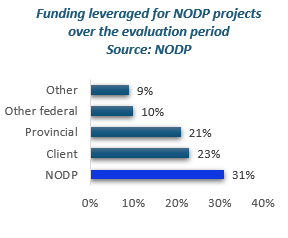
| Funding source | Percentage of funding leveraged |
|---|---|
| Other | 9% |
| Other federal | 10% |
| Provincial | 21% |
| Client | 23% |
| NODP | 31% |
Findings: Performance
NODP contribution to businesses and community capacity
Finding: The NODP contributed to improving the financial resources and capacity of Northern Ontario communities and businesses to respond to, implement, and benefit from economic development opportunities.
All lines of evidence showed that the NODP achieved its expected results in improving business and community capacity, consistently exceeding its performance targets. Between 2015 and 2020, the NODP committed $169M in funding to 437 projects. Each dollar committed leveraged an additional $2.08 from other public and private sources, exceeding the program’s leveraging target of $1.80, and clearly increasing the financial resources available to communities and businesses. The amount leveraged has increased since the last evaluation period (2011-2015) when it was $1.71.
Over five years, this funding contributed to the creation or maintenance of 789 strategic alliances per year between businesses, communities and non-profit organizations, well beyond NODP ’s target of 500 with the vast majority under the CED stream. Almost all survey respondents who received funding for economic development officers under the CIINO said NODP support allowed for the development of strategic studies, plans and regional alliances. Further, two-thirds of community organizations that received NODP funding said their project enabled the identification of viable economic development opportunities.
There is also evidence the NODP contributed to job creation. Among respondents to the evaluation survey, 61% of funding recipients said their NODP project led to job creation. Program reporting showed that on average, each year of the evaluation period the NODP contributed to the creation or maintenance of 2,188 full-time equivalent jobs, well above its annual target of 1,800 jobs. Business Growth and Competitiveness (BGC) projects accounted for the majority (57%) of the jobs created and maintained, followed by Community Economic Development (CED) with 30% and Innovation (INN) with 13%.
Case Study Highlights: Funding for an economic development officer in Chapleau helped the Township to re-develop its waterfront and recreation center and attract new residents to work at the Goldcorp mine.
The majority of those interviewed for the evaluation agreed the NODP contributed to new skills and capacities that allowed communities and business to respond to economic development opportunities, particularly in the area of Tourism, Forestry, Mining, Manufacturing, and Life Sciences.
Case Study Highlights:
- The NODP has been the primary funder supporting the operating costs of the Northern Ontario Angels since its founding in 2009. Between 2009 and 2020, the organization facilitated 357 investment deals between Northern Ontario businesses and angel investors worth $159.5M. Businesses estimated those deals have led to the creation of nearly 2,700 full-time and 1,700 part-time jobs.
- Northwestern Ontario First Nations are working to connect 17 fly-in communities to the electrical grid through the Wataynikaneyap Power project. Through NODP funding, the Nishnawbe Aski Development Fund has been working with a First Nation company to enable community members to take advantage of employment and business opportunities from the project. This included the development of an employment framework and a database of the skills of First Nation community members.
- Through small grants from the NODP -funded Innovation Acceleration Program, the Sault Ste Marie Innovation Centre helped many start-ups solve challenges related to the lack of planning and management skills. Businesses were also able to improve their operations through the introduction of new software or attend trade shows for market research
Looking specifically at the Canadian Experiences Fund, which began in 2019, there is some early evidence from interviews and the evaluation survey of increased capacity. Most respondents said the Fund contributed to skills development and employment in tourism projects, prior to the COVID-19 pandemic. This included inclusive tourism projects, such as a strategy for Indigenous Food Tourism and funding for pride festivals. However, data is limited, given the Fund was in operation for only a short time before the halt of tourism due to the pandemic and few projects had been completed at the time of the evaluation.
Growth and competitiveness
Finding: The NODP contributed to increasing the growth and competitiveness of Northern Ontario communities and businesses.
NODP performance data and the evaluation survey provided evidence of the NODP ’s contribution to growth and competitiveness. In program follow-up reports, 91% of NODP funding recipients reported improved capacity to address economic and business development needs and opportunities two years after their projects ended (these projects would have ended between 2013 and 2017). In the evaluation survey, more than two-thirds of respondents (68%) said that the NODP had made a significant contribution to the overall growth and competitiveness of Northern Ontario.
The two-year follow-up reports also showed strong results on several other indicators of competitiveness. Nearly half (48%) of funding recipients said that the jobs that had been created and maintained through NODP support were still in existence two years after their projects, representing a total of 2,976 jobs. Analysis by FedNor of projects completed between 2009 and 2017 showed high survival rates, with 90% of jobs created still in existence two years later, and many more jobs created since project completion.
Two years after project completion, a third (34%) of funding recipients said their projects had led to improvements in exports, market share, profits, sales growth, employment growth or tourism receipts. In the evaluation survey, a third of business respondents reported growth in exports as a result of their NODP project. Further, 77% of NODP funding recipients responding to the survey said that NODP projects had led to the creation, maintenance or expansion of businesses.
In 2018, the NODP supported a Northern Ontario Mining Showcase at the annual Prospectors and Developers Association of Canada conference. One hundred exhibitors participated, and they reported more than $30M in sales as a direct result.
The evaluation survey provided some evidence that the NODP is strengthening communities. Nearly three-quarters (73%) of recipients of assistance for community economic development projects, said their projects facilitated the achievement of shared regional economic development goals through enhanced collaboration and partnerships. More than two-thirds (70%) said the NODP strengthened community economic competitiveness through implementing plans to diversify and stimulate business investment.
Example: Enhanced community services
According to interviews and media reports, the NODP helped the M’Chigeeng First Nation on Manitoulin Island to open a major chain grocery store in the community. The store is owned, managed and staffed by the First Nation, allowing members to shop in their community and benefit from that spending.
There was also evidence the NODP contributed to innovation. Most of the business respondents to the evaluation survey (67%) said they had developed innovative technologies, products, services or processes, while half (50%) had been able to commercialize those innovations. In the two-year project follow up reports, 7% of projects reported new intellectual property as the result of their NODP projects. According to performance measurement data, NODP funding recipients said they had commercialized 268 products, processes or technologies. They also filed 125 patents, licenses or copyrights as a direct result of their NODP projects. According to FedNor analysis, these new products processes and technologies were largely in health/life sciences or information and communications technologies.
Case Study Highlights: Stufff Inc. produces lubricants from used restaurant oils. It received NODP support through the Sault Ste. Marie Innovation Centre to attend CBC’s Dragon’s Den Tradeshow, and is now selling its products in major retail stores.
Diversification
Finding: There is some evidence the NODP is contributing to its ultimate outcome of economic diversification, viability and sustainability of Northern Ontario communities and businesses.
Given that NODP funding of about $33M a year represents less than 0.1% of the region’s annual GDPEndnote 13, it is difficult to attribute overall economic changes to the program. Between 2009 and 2018, there was little change in Northern Ontario’s slow rate of growth (0.1% annually).Endnote 14 Further, there was little change in the number of high growth firms in the region 2015 and 2018, one of FedNor’s indicators of long-term changes.
However, there is some evidence the NODP may be contributing to the diversification of Northern Ontario’s traditionally resource-based economy. The region experienced growth in professional, scientific and technical services with a 2% increase in the number jobs in those sectors between 2014 and 2019 (Statistics Canada). In the evaluation survey, nearly half of respondents (46%) said their projects contributed to economic diversification. Further two-thirds (68%) of business respondents said the NODP enabled the creation of science- and technology-related jobs.
According to the case study of the Northern Ontario Angels, nearly half (48%) of the deals it facilitated between 2009 and 2020 with angel investors were in the technology sector. One interviewee said that the support of the Northern Ontario Angels is helping to keep “bright ideas in engineering and health care” in Northern Ontario.
Case Study Highlights: The founder of Iregained, a medical technology start up, said the Northern Ontario Angels provided him with access to the financing and support that led him to establish his business in Sudbury rather than Southern Ontario. By the end of 2020, the start up had $1.2M in investments and other funding, and seven employees in Sudbury.
Viability & Sustainability
There is also some evidence the NODP is contributing to the economic viability of Northern Ontario. Most survey respondents (63%) said that the program had contributed to the creation and maintenance of jobs and businesses or strengthening economic capacity. When asked in their two-year follow-up reports how many additional businesses had been created in the two years following project completion, 47 projects reported that 226 new businesses had been created as a result of NODP funding.
Northern Ontario demonstrated a small increase in population growth of 0.9% between 2011 and 2016, after a decline over the previous five years.Endnote 15 While this growth is not attributable to the NODP, there is evidence it may be a contributing factor. According to interviews, youth internships have provided a path to long-term employment and helped to mitigate out-migration from the region. In Sault Ste. Marie, interviewees told evaluators that the Innovation Acceleration Program run through the Innovation Centre is contributing to the emergence of an Information and Communications Technologies cluster, increasing the number of knowledge-based jobs in an area hit hard by a downturn in the steel industry.
Further, more than half of survey respondents (56%) said their NODP projects contributed to sustainability by attracting new businesses and skilled workers or creating more self-reliant communities. For example, the NODP -funded economic development officer in Chapleau took part in regional planning that included successful efforts to obtain federal government funding to update broadband connectivity.
Case Study Highlights: The Nishnawbe Aski Development Fund (NADF) acted as a neutral facilitator in a community planning process in three First Nations in the mineral-rich Ring of Fire region. That process identified housing as the top priority for a community well-being pilot project. NADF helped to implement the project, resulting in 49 new homes and 34 renovated homes.
Findings: Efficiency
Finding: The NODP fully dispersed its budget and its clients are highly satisfied with the support FedNor provides.
NODP Delivery
Program data showed that the NODP fully spent its G&C budget between 2015 and 2020. As FedNor staff are involved in the delivery of multiple programs and since administrative costs are not separated by program, it was not possible to assess the administrative costs and efficiency of NODP directly. However, the last request for incremental funding for the NODP in 2017 included 8% in administrative costs. FedNor’s overall administrative costs are also low relative to other federal Regional Development Agencies (RDAs), despite serving a region with lower population density than most RDAs . In 2019-20, FedNor’s administrative costs represented 17.6% of its total G&C funding, which is lower than all but one of the other federal RDAs .Endnote 16
| 2015-16 | 2016-17 | 2017-18 | 2018-19 | 2019-20 | |
|---|---|---|---|---|---|
| NODP grants & contributions | 35.3M | 31.5M | 30.6M | 38.4M | 31.2M |
| FedNor O&M | 7.5M | 8.1M | 8.1M | 8.8M | 8.1M |
Interviews, case studies and the evaluation survey showed that applicants were highly satisfied with the support they received from FedNor staff. FedNor officers help clients to identify the programs that best fit their needs, develop and refine their projects, and coordinate with other funders. Those interviewed said that FedNor officers were prompt in responding to their questions and, in some cases, invited other funding partners to join a project.
For unsuccessful project applicants, FedNor has committed to acting as a pathfinder directing clients to other sources of funding. Most, but not all, unsuccessful applicants interviewed, said FedNor officers directed them to other funding programs. In the evaluation survey, three-quarters (75%) of unsuccessful applicants said they received a rationale as to why their project was not funded. Those who did not receive a rationale for why their projects were not funded were most often applying under the Community Economic Development stream or the Canadian Experiences Fund. Overall, the vast majority (93%) of applicants whose projects were not funded said they would apply again to the NODP.
Domtar Inc. approached FedNor for assistance to modernize its Espanola pulp and paper mill. Staff directed Domtar to ISED ’s Strategic Innovation Fund which provided $29M in funding. (Interview and media releases)
Application and approval process
Finding: FedNor could improve its client services under the NODP by taking further measures to reduce project approval times, and the length and complexity of its applications processes, especially for underrepresented groups.
Slow approvals have been a long-standing issue for NODP funding applicants and was noted by interviewees. In the evaluation survey, lengthy approvals was the top challenge identified by applicants. Three-quarters (75%) of Community Investment Initiative for Northern Ontario applicants said lengthy approvals were a challenge. Program data showed that just half of NODP applications had a decision rendered within the 80-day service standard. For the remainder of projects, it took, on average, close to six months to receive a decision. The case studies and survey showed that delays in funding approval can put projects and jobs at risk. For example, an Indigenous organization lost experienced staff due to a year of uncertainty around the renewal of NODP funding. FedNor has taken steps to make it easier to submit NODP applications through a two-stage application process that began in 2011. Stage 1 is a short three-page application where clients answer a few basic questions. According to FedNor staff, this allows the Agency to quickly assess whether the funding proposal meets program eligibility criteria before requiring a full submission. Youth internships require a simplified one-step process.
FedNor also put in place redistribution agreements (introduced in 2011), in part, to improve approval times for small projects. Nineteen agreements with outside organizations, worth about $10M, allow these organizations to provide swift approvals for small grants. According to clients of the Innovation Acceleration Program at the Sault Ste Marie Innovation Centre, project approvals came within a week, while approvals for projects submitted directly to FedNor had, at times, taken more than a year. While the redistribution agreements led to higher administration costs than delivery by FedNor, an analysis of these agreements showed the third-party organizations are often closer to clients, better able to understand their needs and provide specialized expertise.
Top challenges for applicants: 48% lengthy approvals, 32% lengthy applications, 24% complex applications, 20% complex claims (Evaluation survey).
FedNor reporting, interviews and the evaluation survey, showed that some potential NODP applicants are daunted by the complexity of the NODP application process. In the evaluation survey, over half of Indigenous respondents said they faced significant barriers in accessing NODP funding, while a third of female and visible minority respondents signaled the same challenge. According to interviews, smaller organizations without dedicated staff often struggle to find the expertise needed to prepare applications. The survey showed that more than a third (39%) of visible minority respondents, who may face language gaps, found the NODP application process complicated. Further, nearly a third (32%) of those from Indigenous communities and organizations also found the application process complex. This points to an opportunity for FedNor to provide greater assistance to applicants from these groups.
In interviews and the evaluation survey, some NODP funding recipients were critical of FedNor’s continued use of paper-based claims and reporting systems. FedNor has been working in collaboration with other RDAs since 2016 to develop a Grants and Contributions Program Management (GCPM) System that would streamline its tools and allow clients to access tools and services online. The GCPM project development is expected to be completed by December 2021, with a planned launch date of May 2022.
The 2016 evaluation recommended that the program should continue to encourage recipients to complete and submit two-year follow-up reports in order to better track longer term outcomes. To address this recommendation, FedNor performed a comprehensive analysis of two-year follow-up forms completed since the form was introduced in 2015 and was available for review by the evaluators.
This review concluded that the NODP has a rigorous system of performance measurement with two-year follow-up reports that support the analysis of longer-term project outcomes. While FedNor has made progress in analyzing its medium-term results, such analysis is not undertaken on a regular basis and there were gaps in monitoring. For example, a case study found that one Indigenous organization had yet to submit final reporting on a multi-million-dollar project two years after project completion.
Recommendation: FedNor should continue to explore opportunities to streamline project approvals. It should also consult with groups, such as Indigenous communities and visible minorities, to see how it can better assist them with the application process.
Distribution of program funding
An analysis of NODP funding over the evaluation period showed it was broadly distributed across Northern Ontario and the percentage of funding approved by region was closely aligned with the percentage of funding requested. The largest amounts of funding went to the regions that include its three largest cities: Thunder Bay ($29M), Greater Sudbury ($20M) and Sault Ste Marie (Algoma $18M). In addition to the funding in the map, NODP supported 29 regional projects worth $22.5M that provided assistance across Northern Ontario. FedNor officers are based in Sudbury and five satellite offices across the region (North Bay, Timmins, Sault Ste Marie, Thunder Bay and Kenora) allowing them to get to know their regions and work closely with clients.
“(FedNor) officers in the North are vital…they live here, they have an expertise in the North and that is a valuable resource.” NODP funding applicant
Figure 3.

The map provides a visual representation of the amounts of NODP funding distributed across Northern Ontario during the evaluation period by region.
-
Figure 3: Long description
The map shows five FedNor satellite offices in North Bay, Timmins, Sault Ste Marie, Thunder Bay and Kenora.
A breakdown of the amounts across Northern Ontario by region can be seen in the following table:
Northern Ontario region Amount Algoma $18M Cochrane $13M Greater Sudbury $20M Kenora $11M Manitoulin $9M Muskoka $11M Nipissing $14M Parry Sound $6M Rainy River $6M Sudbury $4M Timiskaming $9M Thunder Bay $29M
Conclusions
Relevance
Given the relatively slow growth in Northern Ontario, there is an ongoing need for the economic development support the NODP provides. There is also a need for the professional economic planning expertise and support to the tourism sector provided through the Community Investment for Northern Ontario and the Canadian Experiences Fund. However, the tourism sector may require a more strategic and targeted support.
NODP initiatives have provided increased support to help address the needs of its target groups: Indigenous people, women, youth and Francophones. However, there is an opportunity to review and improve the services it provides to Indigenous groups and other underrepresented groups, such as visible minorities and people with disabilities. Funding through the NODP complements other federal and provincial government programs supporting economic development in Northern Ontario.
Performance
The evaluation showed that the NODP is largely achieving its expected outcomes. It contributed to improving the financial resources and capacity of Northern Ontario communities and businesses to respond to, implement, and benefit from economic development opportunities. It also contributed to increased growth and competitiveness of Northern Ontario communities and businesses. There is some evidence the NODP is contributing to its ultimate outcome of economic diversification, viability and sustainability of Northern Ontario communities and businesses.
Efficiency
The NODP fully dispersed its budget and its clients are highly satisfied with the support FedNor provides. Its program funding and program staff are broadly dispersed across Northern Ontario communities. Areas for improvement include further efforts to reduce project approval times and the length and complexity of application processes, especially for Indigenous communities and other underrepresented groups.
The findings from the evaluations produced two recommendations:
- FedNor should examine how it can provide services that are more tailored to the cultures of Indigenous communities and the challenges they face, and whether its target groups should be expanded.
- FedNor should continue to explore opportunities to streamline project approvals. It should also consult with groups, such as Indigenous communities and visible minorities, to see how it can better assist them with the application process.
Annex A: NODP Logic Model

Annex A depicts a logic model for Northern Ontario Economic Development Program (NODP). A logic model shows how program activities are expected to produce outputs and in turn how these outputs are expected to lead to different levels of results or outcomes.
The left section of the logic model describes the NODP ’s inputs, activities and outputs. The inputs of the program include:
- Wages, Salaries and Benefits; Operating and Maintenance
- Grants and Contributions Funding
These two inputs lead to two activities:
- Provide advise, information and support
- Provide funding for projects
These two activities lead to two outputs:
- Information, advice and support
- Contribution Agreements
An arrow leading to the right section of the logic model indicates that these inputs, activities and outputs lead to distinct short, medium, and long-term outcomes.
The short-term outcomes of the program are:
- Northern Ontario communities and businesses have financial resources to respond to economic development opportunities and needs.
- Northern Ontario communities and businesses develop the capacity to respond to economic development challenges and opportunities.
- Northern Ontario communities and businesses implement economic development activities.
The medium-term outcomes of the program are:
- Northern Ontario communities and business show improved capacity to respond to economic development challenges and opportunities.
- Northern Ontario communities and business show increased growth and competitiveness
The long-term outcome of the program is:
- Northern Ontario communities and business are economically diverse, viable and sustainable.
Annex B: NODP changes
In October 2018, the federal government approved a new program called “Regional Economic Growth through Innovation” (REGI). It provides regionally tailored innovation programming by the Regional Development Agencies and FedNor. With the introduction of REGI , some activities/initiatives under NODP ’s Business Growth and Competitiveness, and all activities under its Innovation streams were transferred from NODP to REGI . However, most projects that were approved under these streams prior to October 2018 remained under the NODP .
NODP continues to deliver Community Economic Development programming and other initiatives such as the Community Investment Initiative for Northern Ontario. It was introduced in 2014, as a three-year pilot initiative, to support rural communities and First Nations in hiring a qualified individual to help develop the local economy.
In Budget 2019, the government announced $58.5 million over two years, starting in 2019–20, to the RDAs and FedNor for the creation of a Canadian Experiences Fund. It encourages tourism in rural and remote areas (including the indigenous communities) during the winter and shoulder season, by easing access to capital, and addressing labour shortages. The fund also focuses on supporting the tourism sector through inclusiveness, specifically the LGBTQ2+ community.
Annex C: Case Studies
Northern Ontario Angels (NOA)
The NOA was created in 2005 with the assistance of the NODP to connect Northern Ontario entrepreneurs with investors and the resources needed to grow their businesses. Between 2014 and 2020, the NOA received nearly $2.2M in NODP funding. NODP support allowed the NOA to expand is presence throughout Northern Ontario by creating chapters in five of the region’s largest cities.
Township of Chapleau
Starting in 2015, the Township received $256K to hire an Economic Development Officer (EDO) for three years under the Community Investment Initiative for Northern Ontario. The officer allowed the Township to take advantage of opportunities around the development of a new gold mine, and to implement priorities identified in the Township's 2014 Strategic Plan. Funding for the officer was renewed in 2018, with funding declining over a three-year period.
Sault Ste Marie Innovation Center
The Innovation Acceleration Program provided support to small and medium-size enterprises for grants of up to $5,000 to access technology, business and technical support services to help build and accelerate the commercialization of new innovations. Between 2014 and 2019 NODP contributed $890K to the program.
Nishnawbe Aski Development Fund (NADF)
With $4.4M in NODP funding between 2013 and 2018, the Ring of Fire project supported nine First Nations communities in positioning themselves to develop and realize emerging business/economic opportunities associated with mining development. Through a second five-year project with $4.9M in NODP funding (2018-2023), the NADF offers Comprehensive Community Planning and community economic development support services to 89 First Nations communities across Northern Ontario.